Leaps of faith

Luke 16:19-31

I am a rich person.

I know this because I looked it up on globalrichlist.com, where I entered my income from last year and discovered that I rank in the top 13.74 percent of the wealthiest people in the world.[1]

U.N. wealth-per-capita chart

According to this web site, I am the 824,785,999th richest person in the world, this out of the approximately 6.8 billion people now living.

That is an amazing ranking, isn’t it? I was astonished when I found out how rich I am, when compared to the rest of the world.

At the same time, I also am a poor person.

I know this because I looked in the Census Bureau’s Poverty Report that was released a few weeks ago.

According to that report, I am incredibly poor.  I am so poor that I inhabit, according to the Census Bureau, something called the “poverty universe,” along with more than 40 million other Americans.

One report says I am rich. The other says I am poor.

Let me clear this up for you a bit: For the last five years, I have been an Appointed Missionary of The Episcopal Church. I served for four years in the Diocese of Renk of the Episcopal Church of Sudan, and for about one year in the Diocese of Haiti. During that time, I was paid, by The Episcopal Church, $6,000 per year.  $500 per month. I raised money during that time to help support me, so for both of those reports I consulted, I raised my income to $8,000 last year.

On a worldwide scale, I am rich.

In the “poverty universe,” I am poor.

Census Bureau Poverty Index

Somehow, I have managed to span the great chasm between rich and poor, the chasm of which Jesus speaks as he tells the story of the Rich Man and Lazarus in Luke’s Gospel.

The story he tells is not a new one. It is, in fact, much older than Jesus himself, coming out of the Egyptian tradition. But regardless of its age and provenance, the story Jesus tells is an important one, not just for the disciples and Pharisees who are listening then, but to us now.

Let’s get something straight right off the bat: Jesus – God – has no problem with wealth. We know that because the Bible tells us so. In this very story, Lazarus, the poor man who had been abandoned outside the gates of the unnamed rich man, is sitting next to Abraham, the patriarch of the people of Israel and indeed of the three great faiths of the world. Abraham was a very wealthy man, far beyond simply being rich. He had land, animals, money … By reading that Lazarus, a poor man in such bad shape that he was covered in nasty sores, so weak that he was licked by dogs (that most despised of animals), simply by reading that Lazarus is sitting in paradise next to Abraham, we know that wealth in and of itself is not a bad thing in God’s eyes. By hearing Abraham tell the rich man, “Sorry, you’re out of luck, Lazarus can’t help you,” we know that in God’s eyes, Abraham the wealthy man is also Abraham the exalted man.

So wealth is not the problem that Jesus is highlighting in this story.
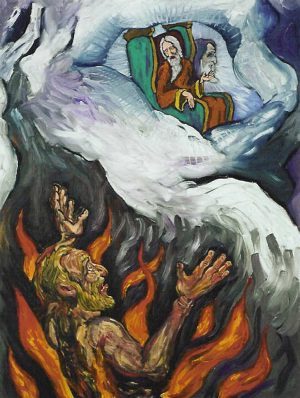
The Rich Man and Lazarus

What Jesus is focusing on is the great chasm between wealth and poverty, between those who have, and those who do not have.

For it is that chasm that gets in the way of God’s will being done in God’s very good creation.

I know a lot about this chasm. I knew a lot about this chasm before I went online and found out that I am simultaneously rich and poor. In my time as a missionary, I have lived among some of the poorest people on earth. I have seen the poverty, and I know what it is like to be on the wrong side of the chasm.

In South Sudan, I lived in a mud hut, with no running water, very little electricity, lots of disease, limited food to eat. And I lived a life of privilege in Sudan, compared to the average person, who lived in a hut made of grass, who had no electricity ever, no clean water and no way to clean the water she had, frequently far too little to eat and no way to make enough money to ensure her children could grow up healthy and strong. I once had to explain to some U.S. government officials who wanted to learn what life was like in South Sudan that, no, there really was no functioning economy there, that most people were poor beyond belief, that there was never enough of anything, and no hope of getting any more. The Americans simply shook their heads in disbelief.

In Haiti, I lived in the poorest nation in the Western Hemisphere. The area in which I lived was surrounded by terrible slums, where people had very little, and even less hope of getting any more, while at the same time they were surrounded by people of wealth. Compared to my life in Sudan, my life in Haiti was full of riches. But when my colleagues saw where I lived, and how I lived, they could only shake their heads and ask me why. Why didn’t I have electricity all the time? Why did I haul water up three flights of stairs? Where was my air conditioner? My TV? (Hint: No electricity, no AC, no TV.)

So I know something, quite a bit, actually, about the poverty that Jesus is attacking in this story we call “The Rich Man and Lazarus” but which one commentator says more accurately should be called “The-Indifferent-Man-Who-Could-Have-Listened-to-Moses-and-the-Prophets-and-Followed-God’s-Way-of-Life-and-Been-Welcomed-Into-Paradise-by-Father-Abraham-But-Chose-Not-To and Lazarus.”[2]

The rich man, who is given no name in this story, knew what he was supposed to do. The Torah, the Five Books of Moses, told him: Care for the poor, the sick, the widows and the children. Leviticus says to love God with all your heart, mind, soul and strength. Deuteronomy says to love your neighbor as yourself. You cannot do the former if you do not do the latter. The Prophets who came after Moses said the same thing. Micah asks, “What does the Lord require of you, o mortal, but to do justice, love kindness and walk humbly with your God?” (Micah 6:8) Proverbs say that “If you close your ear to the cry of the poor, you will cry out and not be heard.” (Proverbs 21:13) Isaiah quotes God thundering, “What do you mean by crushing my people, by grinding the face of the poor?” (Isaiah 3:15) followed by a promise from God to never forsake them. (Isaiah 41:17) Jeremiah laments: “For the hurt of my poor people I am hurt, I mourn, and dismay has taken hold of me.” (Jer. 8:21), then asks, “Is there no balm in Gilead? Is there no physician there? Why has the health of my poor people not been restored?” (Jer. 8:22) Ezekiel proclaims: “This was the guilt of your sister Sodom: she and her daughters had pride, excess of food and prosperous ease, but did not aid the poor and needy.” (Ezek. 16:49)

Moses and the Prophets continuously spread God’s word: We are to care for the very least among us.

In telling the story of the rich man and Lazarus, Jesus continues in that same prophetic vein:

You see someone in need, you help him.

You feed the hungry. Give water to the thirsty. Make the lame leap for joy, the blind see, the deaf hear, the mute speak. Visit the sick and those in prison. Clothe the naked.

Lord knows – and it is true, God truly does know – that there is a great chasm in this world between the rich and the poor, between the have’s and the have-nots. You and I know it, you and I have seen it, some of you and I have lived in it.

But just because it exists does not mean we can’t do something about it.

Rich or poor – or both, if you are like me – we can cross that chasm – in this life – and we can do something about it, if we so desire. In this country alone, more than 44 million of us inhabit what the Census Bureau now calls the poverty universe. More than 85 percent of the world inhabits that same universe.

Is that what we want?

Is that what God wants?

The real question we have to ask ourselves this morning is this:

Are we willing to cross that chasm ourselves?

The only way to answer that question is to figure out what exists in our lives that keeps that chasm there, and keeps us from crossing it. We may not want to cross it because the poor are too much like Lazarus, covered in ugly sores, so weak that the dogs – the dogs – are able to lick his wounds without hindrance.

We may not want to cross the chasm because to do so would mean leaving our comfort zones, and we are afraid.

We may not want to cross the chasm because we may feel, in our deepest secret places, that sometimes, the poor deserve what they have, or rather, what they don’t have. We may feel that far too many of the poor are poor simply because they refuse to work.

(But know this: In this story that Jesus tells, Lazarus is so far gone that he didn’t go to the rich man on his own to beg. He was placed there because he was so far gone that the people who put him there knew the rich man was his last hope. So in this telling, Jesus is quite clear that he is not talking about people who refuse to work; he is talking about people who cannot help themselves.)

Whatever reasons we may have for not wanting to cross the chasm, we have so many more for doing so.

It doesn’t take much to become poor; we all know that. The economy in this country and around the world went from riding high to sinking like a lead balloon almost in the blink of an eye. We all know someone – and generally more than one someone – who lost their jobs, and then their savings, then their homes. Going from being a rich person to poor, which is so often outside our control, is frighteningly easy. In other words, one very personal reason for crossing the chasm is that because we could have been, and still might be, the ones on the far side, the ones who need help.

We know, too, that while there is nothing wrong with being rich – however you define that term – there is something wrong, in God’s eyes, with not using our wealth to help others in need. We may not be in a position to join Warren Buffet and Bill Gates and all those other billionaires who are giving away half their fortunes, but surely we are able to give something to those who have less.

And we may not be the ones who are called to work directly with the poor. Our call may be to use our wealth – however big or small – to help others help the poor. There is nothing wrong with that – each of us has different gifts, and some people’s gift is to fund the work of others.

Whatever our gifts are, the important question we always have to consider is this: Do we want to cross the chasm?

Because that surely is what Jesus is calling us to do today.

To make the leap of faith and cross the chasm.

Are we willing?

Amen.

A sermon preached on the  18th Sunday after Pentecost, 26 September 2010, Proper 21 Year C, at Christ Church, Millwood. 


[1] cf www.globalrichlist.com

[2] The Rev. Dr. George Hermanson, “Paying Attention,” on David Ewart’s www.holytextures.com,

Share this:
Share this page via Email Share this page via Stumble Upon Share this page via Digg this Share this page via Facebook Share this page via Twitter

Avoiding mission drift

From The Alban Institute:

By Peter L. Steinke

Visiting a relative who lives on the Great South Bay off the shores of Long Island, several of us joined him for a boat ride. We were on the bay in early afternoon, enjoying the breeze and fast ride. Some dark, scattered clouds cast shadows on the water, but the sky was mostly blue. The weather forecast called for sunshine with scattered showers in the evening. But several of the dark clouds suddenly bonded together. A strong breeze accompanied the darkening sky. Within minutes, everything became gray, concealing any sight of land. The wind-driven rain made visibility even more difficult. Unable to see land, the skipper turned to his boat’s compass to orient himself and the boat. Motoring slowly, he was able to dodge other boats on the bay as we headed for the now-invisible shore. Eventually, we saw partial outlines of beach houses as we approached land. Totally drenched and hyperalert on our own adrenaline, we docked at our destination. Oriented by the boat’s compass, we escaped harm’s way, landing safely.

To be headed in a direction serves people well in life, just as it did for us on the bay. According to Edwin Friedman, a distinctive mark of a mature person is having clear life goals. Guided by personal goals, an individual is less likely to be distracted or detoured by the reactivity of others. Someone else’s behavior does not determine yours. Based on principles and values, you direct your life. Friedman often referred to the analogy of sailing to illustrate his point. Without a destination, a sailor on a lake meanders and drifts. The sailor will not adjust the sails to take advantage of the wind to proceed to the chosen landing place. If this is true on water, what about in life? Is orientation possible without destination?

Considering all of the complexities and challenges facing churches, it is amazing that more of them are not on the brink of oblivion or in harm’s way. Many are not using a compass to navigate the hazy conditions created by cultural shift. When consulting with churches embroiled in conflict or paralyzed by passivity, I always ask the congregation, “Does this congregation have a clear sense of its mission?”

Typical responses range from “poor sense of purpose” to “running in circles,” from “lack of vision” to “our mission is not to have a mission.” Questions like, Who are we? What is our primary focus? go begging for answers. Then when I ask individuals what they think the mission is, the answers are rote: “spread the word,” “support the church,” “love everyone,” and “preach the Bible.” No one has ever said, “Our mission is to turn the world upside-down,” or “to join God’s ongoing promise to recreate the world,” or “to let the world know that the resurrection means the world has not seen the last of Jesus Christ.” Some members believed their congregation had a sense of mission because they had a mission statement. Sad to say, few knew what it was.

Limping along without a focus is called mission drift. It is what happens when people come together to support an objective but forget what the objective is. People lose their reason for being, even though they go through the motions. Many things contribute to the sidetracking, such as compromising ideals in succumbing to a pressure group, searching for instant viability or solutions, grasping for saviors, fooling themselves that they are vital or viable simply because they endure, preoccupying themselves with nonessentials, exchanging their core beliefs for more marketable ideas, or failing to attend to what God is calling them to do in their little corner of the world.

If mission is so essential to the congregation’s life and well-being, what exactly does mission mean?

There is a movement called “the missional church.” People assign marks or attribute certain actions to a missional church, but I find the term confusing. It is similar to saying “the ruling government” or the “athleticism of the athlete.” Either a church is missional or it is not the church. Mission is the nature and purpose of the church, not some list of qualifiers.

An additional confusion about the word mission comes from assuming mission necessarily results in growth. Distinguishing between congregations in survival mode (not growing) and those in mission (growing) is not honest and certainly not helpful. Every congregation, as a living system, is in the survival business. Thousands of congregations are decreasing in numbers, but some are also alive and sensitive to mission. Who is to condemn them to the category of survival? All things eventually reach their maximum growth. Are they then to be renamed as survival systems? Survival is fundamental to all organic life. Anything can be eliminated, obliterated, or cremated. Survival is not the church’s problem. The threat of it may even be the very stimulus needed for new action and direction.

Countless churches are floundering, trying to understand why they exist. Mission drift is especially problematical for those churches that have experienced a steady decline in membership. A church that once numbered one thousand and now is supported by two hundred is a significantly different church. The mission is the same, but the refocusing needed for directing it escapes their imagination.

Systems theory refers to an individual’s functioning position, a specific way of behaving. Organizations, like people, are emotional systems that also develop ways of functioning. As congregations decline, their functioning position changes, yet many continue to function as if nothing has changed.

A congregation is a group of people who believe that more can be accomplished by joining with others. They come together with a purpose. To create more life, the people create a community of purpose. After many years of being together, though, people may wonder what happened to the purpose, to the vision, to the creativity, and to the meaningful service that once energized them. This is normal. Again and again, we have to explore why we came together. Congregations need to continue to review who they are and how they will respond. What are we trying to be? What is our calling at this time and in this place? Can we make a difference? Is there a purpose for our presence? If we are unaware of the particular view through which we are looking at the world, then we do not have any true choices about what we are going to see and how we are going to respond.

Mission is the expression of the church’s deep, abiding beliefs. Mission provides the major standard against which all activities, services, and decisions are evaluated. Mission is the preserver of congregational integrity. It is about God’s love for the world, not about what I like or don’t like about my church. A major function of the congregation’s stewards is to be the creators and guardians of the mission. They defend the mission against resistant forces that would threaten or destroy it. They oversee the mission’s implementation. They keep the mission alive.

Comment on this article on the Alban Roundtable blog

__________________________________________________________

Adapted from A Door Set Open: Grounding Change in Mission and Hope by Peter L. Steinke, copyright © 2008 by the Alban Institute. All rights reserved.

Share this:
Share this page via Email Share this page via Stumble Upon Share this page via Digg this Share this page via Facebook Share this page via Twitter

Our day of liberation

Luke 13:10-17

This morning’s Gospel passage from Luke may be a new one for many of you. Oh, it’s not something that was recently added to the canon, but it is one that for many years, until quite recently in fact, we never heard on a Sunday morning.

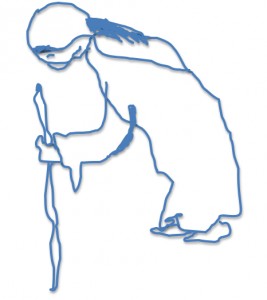
Luke today tells us the story of the woman bent over for 18 years. A woman condemned by some ailment to shuffle along in life, probably needing a stick to keep her balance, certainly condemned by those around her who believed that those who suffered were being punished for their sins.

The woman’s story is what author Mary Ellen Ashcroft, in her book The Magdalene Gospel, calls one of the “muffled whispers” of the Scriptures. It is muffled because the focus here is on a woman, an unnamed woman, and like so many other stories about women in the New Testament, it is briefly mentioned, if at all, and then all too often quickly forgotten.

But if we skip this story entirely, as the lectionary did for so many years, or pass over it too quickly, as we might be tempted to do, we miss not only who God is in our lives, but how God is acting – right now, today – in our lives. If we don’t pay sufficient attention to this woman and what happened to her in that synagogue 2,000 years ago, we might miss yet another chance for us to learn something important not just about God, but about ourselves as well.

Luke tells us that this woman was so crippled she could not even see the sky, that she could not look another person (at least, not another adult) in the eyes. He uses the word panteles – all (pan) complete (teles). It is a word with eschatological – with end-time meaning (telos usually refers to the “consummation of the universe”).[1] One commentator says that Luke used this very descriptive word to “suggest that this woman was unable in any sense – physically, spiritually, psychologically, eschatalogically – to raise herself up.”[2]

Imagine what it must have been like for this woman … to be bent over, neck stiffened, staring at the ground, at the dirt, all day long. The only way she was going to see the sky was if she laid down on that ground in broad daylight! The only way to look another adult in the eye was to have that person lay down on the ground in front of her! She spent her days … bent over … looking down … at the very dust to which the serpent was sentenced to spend its life after deceiving Eve and Adam.

In her book, Ashcroft takes the stories of 10 women who followed Jesus and imagines them gathered together on the first Holy Saturday – after the crucifixion but before the resurrection. The 10 women are women we know from the Gospels: Mary, the mother of Jesus; Mary Magdalene; Mary and Martha, the sisters of Lazarus; Joanna, the wife of Herod’s steward; Susannah, Salome and Mary Clopas, who are mentioned by name, but only in passing; the woman who bled for 12 years; and today’s woman, who was bent over for 18 years, but is given no name, which is true for almost everyone who was healed by Jesus. They, too, were not identified by name, only by their ailment.

As these 10 women sit in Mary and Martha’s house in Bethany, restricted there by the commandment to keep the Sabbath holy, and by all those other commandments that grew up around that one – the commandments that said they couldn’t light a fire, couldn’t cook, couldn’t walk beyond a certain distance, couldn’t gather wood or wash clothes or really, do much of anything, except honor the Lord – they comfort each other. They mourn the loss of their Lord, and they begin to share their stories of how they first met Jesus, of how Jesus healed them, how he set them free, and how, as a result, they left everything to follow him.

Ashcroft gives the woman bent over for 18 years a name, Rhoda, and she gives her a voice, a voice that tells us (through Ashcroft’s imagining), what her life was like:

Her life was normal for a girl child and then a young woman who lived in the days when Jesus walked the earth: She cooked, she cleaned, she spun wool, she care for children. But then one day, she woke up and her body was twisted, like her life. She kept on doing what she had done before, because she had no choice. What was she to do? There were no doctors who could heal her, and her prayers went unanswered. Eventually, even the children for whom she cared grew up, and jeered at her over her head, and called her names. Eventually, people stopped talking to her and instead spoke only over her, over her crooked spine and bent neck.

For 18 years, Rhoda says (as Ashcroft imagines), she could see no sky, no planets in their courses, no faces of other people. Her life, she says, was one of dust and dirt. I never talked to anyone, looked at anyone, touched anyone. I began to wonder if I were really human.[3]

Can you imagine a life like that? Because that’s what Ashcroft, the author, wants us to do. She wants us to imagine our lives lived like that – alone, separated by an ailment, spoken to most often in a jeer, condemned to study the dust and the dirt.

And then one day, Jesus comes to town, and Rhoda decides she wants to hear – not to see, but only to hear – this man about whom people say such great things. So she goes to the synagogue – hobbling there, dusty step after dusty step, sun beating on her back[4] ­— and has to push her way in because so many others are there. But there is no space; no one wants to make room for her. She is about to leave, filled with sorrow because she could not be there, when Jesus calls her forward … her, the woman no one pays any attention to, the woman no one looks in the eye, the woman who felt more like a beast of burden than a full human being … Jesus stands in the front of the synagogue, where only men are allowed, and calls her to him.

And when she gets to that hallowed space, Jesus says to her:

“Woman, you are set free from your ailment.” He laid his hands on her – as Ashcroft imagines, this was the first time in a very long time that anyone touched her with love and tenderness – and immediately she stood up straight – straight! able to look Jesus in the eye! – and began praising God.

Now, don’t you just know it, the whole freedom thing, the whole praising God thing, get overlooked by the leader of the synagogue, who is more concerned with doing things the right way, on the right day, who is so bound up by the commandments to make holy the Sabbath, that he misses the whole point of who Jesus is and what Jesus is doing!

“There are six days on which work ought to be done” – healing somebody in need, setting that person free, is work?!? – “come on those days and be cured and not on the Sabbath,” the leader shouts (and you know he had to be shouting by this point, because everything about this healing was wrong, wrong, wrong according to the commandments: the healing, the woman coming forward, the woman speaking in the synagogue …

Not only does Jesus not care about those commandments, he schools the leader in the Torah as well: For Jesus is the one who remembers that the commandment to keep holy the Sabbath (from Exodus) is there not only to get people to rest, but also so that the people will remember – will never forget – that they once were bound up – in Egypt! – and that God set them free from their bondage and then declared (in Deutoronomy 5, for those who wish to look it up) that they were to use the Sabbath as a day of celebration! The Sabbath, God makes clear – long before this particular healing took place – the Sabbath is supposed to be day of freedom, the day of liberation!

God set the people free, God sets us free, and by God, we are never supposed to forget that!

That was Jesus’ argument: God has liberated us, and what better day to liberate a woman bound up by an ailment than on God’s holiest day!

And then, to really make his point, Jesus sets the woman free again! In front of everyone, standing there at the front of the synagogue, where women don’t belong, Jesus calls this woman a “daughter of Abraham,” a term never before and never again used in the Scriptures or in any other writings about the chosen people of God. He calls her a “daughter of Abraham,” giving her the same rights, blessing her with the same inheritance, that all men, all the “sons of Abraham,” had.

Jesus not only sets this woman free from her ailment – the one that had condemned her to a lesser place in that society – he sets her free to stand up before the Lord, to see God face to face, to look God in the eye, as a full human being, unrestrained by commandment after commandment that kept her quiet, that kept her in the back of the synagogue, that denied her the education, the blessing, the beauty of the Torah.

Jesus sets this woman free not once, but twice.

“Woman, you are set free.” And she responds by praising God loudly, right there, in front of everyone, despite the fact that she wasn’t supposed to be right there, in front of everyone, and despite the fact that she was not supposed to speak in the synagogue. She rejoices! She praises God! And eventually, after listening to the argument between Jesus and the leader of that synagogue, so do the people. Because right there, in their sight, freedom has come.

Do you see now why this story, which for most of the Church’s history was not told on Sunday mornings in church, do you see now why this story is so important for us?

It’s not just a story about a woman bent over for 18 years.

It is a story about liberation – our liberation! A story about us being set free. A story about how God comes into our lives and removes our ailments and allows us to stand up straight before the Lord, to see God face to face and look God in the eye and rejoice in our own liberation!

Jesus is standing right here with us, right now, in this place, offering to lift us up, to remove our burdens, to heal our ailments.

Jesus is right here with us, touching us with loving hands, assuring us that we are not alone. Jesus is lifting us up, helping us to stand up straight, telling us that we have been set free!

This is our day of liberation … and by God, we ought to celebrate that!

Amen.

A sermon preached on he 13th Sunday after Pentecost, 22 August 2010, Proper 16, Year C, at St. Andrew’s Episcopal Church, Arlington, Va.

[1] John Petty, http://progressiveinvolvement.com.

[2] ibid.

[3] Mary Ellen Ashcroft, The Magdalene Gospel: Meeting The Women Who Followed Jesus.

[4] Ibid.


Share this:
Share this page via Email Share this page via Stumble Upon Share this page via Digg this Share this page via Facebook Share this page via Twitter

Haiti, get up!

The Fourth Sunday of Easter, 25 April 2010, Year C, St. Jacques le Juste, Petion Ville, Haiti

Today’s reading from the Book of Acts is actually a parable about Haiti. It is a parable that speaks of who we are and what is happening in Haiti right now. I know that might not make sense, but bear with me and you will see: The story of Tabitha is our story.

In Acts, we are told the story of a disciple of Jesus named Tabitha, a woman who did many good works and who cared for those in need. Tabitha took ill, and then she died. As was the tradition in her culture, she had to be buried before sundown. So her family took her body, washed it, laid it out on a table, and then they sent for Peter, who was nearby. Come quickly, they said. Tabitha has died.

Peter came, made everyone leave the room, prayed over Tabitha and then said to her, “Tabitha, get up!”

And she did. She opened her eyes, saw Peter and got up. Because of her resurrection, we are told, many people believed in the Lord.

This story is a parable our own lives right here and right now because it is so similar to everything going on in Haiti. The earthquake came; many died; more were injured. The world saw this and said, “Ah, Haiti is dead.” Many in the world rushed here to help; others gave generously. But still, there was the thought, a thought sometimes said aloud, that Haiti was dead.

I know this. Bishop Duracin has me working in both the United States and Haiti, so I hear what is being said and I read what is being written. There are many who believe that Haiti cannot recover from this tragedy. There are some who say that Haiti should become a commonwealth of the United States. That the government of Haiti should be removed. That the constitution should be rewritten. There are those who claim that Haitians cannot direct the recovery, that “they” know better what needs to happen, that “they” should be in charge.

These people – they don’t know Haiti. They don’t know Haitians.

Because what they are saying is not true! Haiti is not dead!

It is not dead because Haiti and its people are listening to God, to the Good Shepherd who knows them each by name, and whose voice they know. Haitians are paying attention to the one voice that is calling to them.

And what is God, what is the Good Shepherd, saying to us here?

“Haiti, get up!”

“Get up!”

• • •

Three weeks ago, the Diocese of Haiti held its Synod, the Synod that had been delayed by the earthquake of Jan. 12.  Many of us went – priests, deacons, lay delegates – and at the Synod, we were given a message by Bishop Duracin:

“Haiti, Leve Kanpe Pou Ou Mache!

“Haiti, Stand Up and Walk!”

Haiti, get up!

And we are getting up and we will get up, because we do listen to the voice of God. Haiti is one of the most God-fearing countries I’ve ever seen, and I’ve been in a lot of countries. Haitians are Christians. They know God. They love God.

So when God says to us here in Haiti, “Get up!”  that’s what we need to do.

Get up!

No matter how hard it seems, no matter the difficulties we encounter.

And yes, there are difficulties.

The Psalmist this morning speaks of walking through the valley of death.  That is certainly true here right now. Just look out the door. Look at your own homes, at your own lives. Every single person in this room has lost someone, many of you have lost many people, more of you have lost your homes. You are walking through the valley of death.

But the Psalmist also is clear: We have no need to fear evil, because God is with us.

God is the one who is calling us, who is telling us to get up.

God, the Good Shepherd, the one we all know by name, the one whose voice we have heard before and are hearing now and will hear forever, is speaking to us right now.

Haiti is not dead.

Haiti is alive, and its people are alive, and its faith is alive.

Those of you who are here to help Haiti are here because you, too, hear God calling to you: Get up! God says.

That is our mission now: Not just to get up ourselves, but to help Haiti get up. The Church is leading the way, but we can only do so if we listen to the voice we know best, the voice of the one who loves us.

Get up!

Get up!

Get up!

Amen.

Share this:
Share this page via Email Share this page via Stumble Upon Share this page via Digg this Share this page via Facebook Share this page via Twitter

Packed and not so ready to go

Thursday in Easter week:

Dear Beloved in Christ:

It is my last night in Haiti for two weeks, and even though I am packed and almost ready to go, there is a large part of me that wants to stay. Yes, I look forward to the amenities of the U.S., but it is hard to leave behind my friends here, my family here, my colleagues, and even the people on the street whom I do not know but see daily.

It’s been nearly three months since the earthquake. I do see some progress; I see buildings going up (some of which do not look safe in the least, to be honest). And yet, I still see more buildings that have yet to be taken down. Driving through Port au Prince several times this week, I’ve seen more and more government workers out — easily identifiable by their bright yellow T-shirts — removing rubble, clearing more streets, trying hard to improve life.

But those improvements are slow in coming. I don’t know that most of the world understands yet how complete this devastation is. One of the priests here told me just yesterday that every single one of his churches was destroyed in the earthquake. Every single one. He needs large tents — as do many of our other priests — in order to have a place in which to hold worship, so that the people don’t have to stand in the brutal sun or get drenched by the rains. We still have buildings that are pancaked, still have buildings that are atilt, still have to maneuver around rubble in the streets.

And we still have hundreds of thousands of people who are homeless. They live in tents, sometimes in camps, sometimes on their own property. A friend just sent me a text message telling me that the front porch of their house collapses this week after several more small but still deadly aftershocks. He and his wife still cannot live in their own home.

Walking the streets, you are overwhelmed by the smells — of food being cooked on the sidewalks, of unwashed bodies, of no sanitation. The tents are right on top of each other … people have a “living space” of approximately two square feet per person, if that. It is absolutely amazing that this many weeks later, people still have no place to live.

And then there is the rain. Last night, a sudden downpour flooded the capital. Literally. I was having dinner with some friends when the rains began. We joked about how it wouldn’t be so bad running across the street to get home, because at least then we could wash the dust off of us from our long day of travel. When the rains abated — somewhat — we headed for the door, and discovered a gushing river in what was our street. The water was filthy and running fast, so fast that I wondered if we would be able to keep our footing. I had my backpack with my computer in it, and didn’t want to attempt a three-foot jump onto a slippery step leading to my church and apartment. So I waded through the water, carefully trying to plant each foot. The Lord alone knows what was in that river of filth; all I can tell you is that within minutes of arriving home, my feet were on fire. I couldn’t wash them fast enough or even enough to rid myself of that feeling.

And I have the blessings of having an actual apartment, on the third floor, to which to retire. I have buckets of more-or-less clean water in which to bathe. The people on the streets? In the tents? They have nothing. Some in the tent city across from my church draw water from our reservoir every day … without that, I do not know what they would do.  On Easter night, a woman showed up at the gate at 9 p.m. There were 12 one-gallon jugs of water waiting for her. She took two jugs in each hand, and made three trips to where she is staying.

Such is life in Haiti.

And yet, at our Diocesan Synod this week — delayed 10 weeks by the earthquake — there was much joy as well. The parishes took up collections on Easter Sunday to begin the fund for the reconstruction of Holy Trinity Cathedral. Each priest presented that money at Synod, in a joy-filled service on Tuesday. For the offertory, the people of the parish of Bon Sauveur in Cange literally danced up the aisle with their offerings: fruits, grains, sugar cane, farming tools, live roosters, a live turkey (which might be what we ate the next day …), vegetables and more. It’s a traditional offering, complete with dance and song, and is a celebration of the fruits of our lives. It also gives new meaning to the liturgical saying, “All things come of thee, O Lord, and of thine own have we given thee.” Truly, the people of Haiti give back to the Lord on a daily basis, even when they don’t have much to give.

Which makes it harder to leave every single time. Because if they can and do give so much, if they are suffering so much, how can I simply come and go so much? But … that is the assignment Bishop Duracin has given me, and right now, it is the best use of my gifts. So, I pack up once again, cover up my belongings here with sheets to keep the dust off, and head out to the airport. In less than two weeks, I’ll be back, so it isn’t as though I am leaving my adopted country forever. I just have to keep one foot in America, one foot in Haiti, going back and forth, for a while to come.

And even in the midst of all this devastation, there are good things to see. Walking down the streets, I see so many of my friends, and I know that strangers continue to be astounded at the joy of each meeting. This is Haiti — here we greet each other with hugs and kisses on the cheek. We laugh, we joke, we arrange to get together, we make sure that we know where each of us is, and what we are doing, we try to help each other. My street artist friends are delighted to know that the paintings I buy from them are to be sold in the U.S., and that their work in turn will fund the rebuilding of this nation. My vendor friends keep cold drinks hidden away for me, knowing that as I walk by, I will ask for my too-sweet-but-filling Tampico orange drinks. The children on the street play games with me — thumb warfare sometimes, other times just the word games we play about asking for money. The security guards at hotels nearby all greet me, and the waiters at restaurants (where I usually only go with visitors) all stop to greet me as well.

The other day, standing on my balcony, I realized for the first time that the big tree growing over the wall is an avocado tree! I had been watching a bee pollinate the blossoms, and suddenly saw … avocados! Turns out, it belongs to the hotel across the street, for it is actually growing in their parking lot. But the branches that cross over that wall? The fruit of those branches is ours! At first, I found just four tiny avocados — which still have a long way to go in their growing. Avocados here are between 8 and 10 inches long, and at least four inches around, and are so very delicious. Then I realized that there were all these buds on the tree branches. THEN, a few hours later, I came out to examine the tree again, and found five more teeny-tiny new avocados bursting forth. Finally, I looked up — remember, I’m on the third floor, so the branches are at eye level — and saw hundreds of buds! Oh, my gosh, I said to my friends, we’re going to have to open a market! We’ll be rich!!!! Thank God for that bee that drew my attention to the riches of God’s grace, literally right before my eyes.

There is another tree growing in our courtyard which bears what I think is breadfruit. I’m actually not certain what the fruit is, only that is is good to eat, and better to be turned into juice. I haven’t done the latter yet, but have partaken of that blessing as well. This tree literally grows through the steps leading to the parish hall on the second floor behind the church. I didn’t realize that it, too, is a fruit tree. I will eat more of this fruit when I return.

This morning, I saw hundreds of children lining up to enter schools, which reopened this week. Not all of the schools are ready to reopen, but some have, and to see the children in their varied uniforms — every school child wears a uniform here — brings joy to all of us, for it is a sign that some normalcy is returning, and that education will continue, even if it has to happen under tents or in some cases, under the trees.

And just a little while ago, there was yet another street party right outside my door. Granted, the music is just a tad loud for me — anything that makes your heart thump is too loud for me. But it was joyful music, and brought joy to the thousands living in Place St. Pierre, even if only for a few moments.

Earlier this week, I drove from Port au Prince to Cange and then back. My triumph: I drive like a Haitian now, one hand on the steering wheel, one on the stick shift, one finger on the horn, ready to use it, at all times. Several times, I told my passengers to close their eyes — it’s easier for them. This may not sound like much of an accomplishment, but trust me, it is. To drive in Haiti is to be really bold — or to be crazy. We have three basic rules of the road: One, all other drivers are crazy. Two, lock your doors. Three, see Rule Number One. Oh, and it IS necessary to have a good horn. Weak horns on cars bring derision from all around. Good horns earn accolades. My car, which Bishop is driving right now (his was crushed when his house collapsed in the quake, and his new one is not yet here), has a decent horn. The rental car’s horn: Excellent. Not as good as the horn in a friend’s car — that’s a monster horn. But still, it was very good. And I am proud to have driven up-country. It leaves me with a feeling of panache.

There are two things that are hard for people to believe about Haiti: The first is that this devastation was, is and will continue to be, beyond description. The second is that in the midst of it, there is still joy.

Such is life in Haiti.

Blessings and peace in this Eastertide,

Lauren

Share this:
Share this page via Email Share this page via Stumble Upon Share this page via Digg this Share this page via Facebook Share this page via Twitter

Easter in Haiti: Alleluia!

Dear Beloved in Christ:

Easter in Haiti

Easter services here were incredibly powerful today. To be able to proclaim, “Alleluia! Christ is risen! The Lord is risen indeed. Alleluia!” in a place that is still filled with death almost defies description.

Hearing the angel proclaim “He is not here” in Luke’s Gospel brought tears to my eyes, for there are so many — perhaps as many as 300,000 — who are not here with us now. At the English service, I read Bishop Duracin’s Easter message to the congregation. (In Haiti, the Bishop is the preacher in all of our parishes.) In his message, Bishop spoke of how we remember “a relative, a friend, one who was close to us, all of whom, in most cases, were denied funeral ceremonies where we could say goodbye with human dignity. Thus,” he wrote, “crossing the desert has been and still is long and extremely difficult.” Although I had read the message in advance, I still found myself almost unable to continue. I know I was not the only one thinking of friends and family, and seeing again the awful devastation which still remains with us, or the bodies that are still being found.

But Bishop Duracin also told us: “The devastating earthquake of January 12, 2010, does not stop us from singing in joy and gladness, ‘Alleluia, He is risen.’ … We can no longer continue to look for Jesus among the dead, we can no longer remain in tears because of our dead, because, if during their earthly life, they knew love, their place is in the Kingdom with the Lord to reign with Him in His eternal glory.”

His message, and that of the Gospel, reminded us that we have much to celebrate here even in the midst of death, because “God is a God of life, a life that flows from his love for humanity, a love that is embodied in his Son Jesus Christ.”

I drew strength from that message, and from the celebration of the Eucharist, my first Easter Eucharist in this country. At the fraction, I found myself so caught up in the joy of the moment that I repeated the Easter acclamation, a slip of the tongue that brought smiles to all of us. By the end of the service, the joy of the Resurrection was so powerful that I repeated that acclamation again, with great gusto, and with equal gusto, the congregation replied, nearly shouting, “The Lord is risen indeed! ALLELUIA!”

Yes, we are surrounded by death in Haiti. But we are also surrounded by new life, by the new creation that God proclaims. Which is why, especially here, we are proclaiming “Alleluia!” with all our beings.

Bishop Duracin and all of Haiti bids all of you, “Joyeuses Paques!” Happy Easter!

Your servant in Christ,

Lauren

Share this:
Share this page via Email Share this page via Stumble Upon Share this page via Digg this Share this page via Facebook Share this page via Twitter

Waiting for resurrection

Holy Saturday in Haiti:

Dear Beloved in Christ:

On this Holy Saturday, the sun has set here and technically, we can make our proclamation of the Risen Lord. Technically. But we don’t do that in Haiti. Our tradition is that we wait until Easter morning to shout with joy. So we are, like so many around the world, still waiting.

That’s what Holy Saturday is all about anyway — waiting. The women were waiting for the Sabbath to end so they could go to Jesus’ grave. All of creation was waiting to discover what God would do next.

And that’s what we’re doing here in Haiti as well. We’re waiting.

People who need medical care wait for hours to be seen. People wanting food stand in line for even longer. Those living in the Tent Cities are waiting for more information from the government, to find out where they can go next, where they might be able to find a place to live. Students are waiting for schools to reopen. My friends on the streets wait for someone to come along to buy something, so that they might have enough money to feed their children for one more day, or pay a school fee when those eventually come due.

It’s not that Haiti has come to a standstill, with all this waiting going on. There’s so much happening here, day and night, as people try to remake their lives, that it seems the country never rests. In the area where I live, up in Petion Ville, above Port au Prince, the main road right outside the church is always busy. What wakes me up at night is not the sound of trucks grinding gears as they climb up or down the mountain, but any absence of sound. That’s when I find myself waiting, trying to figure out what’s going on, why the traffic has stopped, whether something is wrong.

We held our Easter Vigil tonight at St. James the Just. Before the service, we were waiting to see if we could find a new Paschal Candle … we had been searching for many days, but so far no luck. In the end, when we had waited long enough, we got out last year’s candle, with “2009” clearly stamped on it, dusted it off and put it to good use again. While singing the Exsultet, I had to wait a few times while a man out on the street struggled to start his car, his engine grinding so loudly that I couldn’t be heard. As the darkness fell and became complete, it surely felt like the time had come to end the waiting. But because of the traditions in this place, we have to wait just a few more hours.

Haitians are patient people. They know how to wait. But I think the time has come to end all this waiting. I am as anxious to end Haiti’s waiting as I am to proclaim the Risen Lord.

Just one more night, Lord.

Then we can greet you anew, with great vigor and joy, shouting at the top of our lungs, “The Lord is Risen indeed! Alleluia!”

Would that Haiti’s wait for new life would be as short, and that it ends with the same joy.

Blessings and peace,

Lauren

Share this:
Share this page via Email Share this page via Stumble Upon Share this page via Digg this Share this page via Facebook Share this page via Twitter

Walking in death to life

Maundy Thursday in Haiti:

Dear Friends in Christ:

In Haiti’s epicenter, anywhere you walk, you are walking in death.

Everywhere you step in earthquake-devastated epicenter of Port au Prince and Leogane and the surrounding areas, your feet get dirty. There are few open spaces left, and what once was open is now filled with tents and tent cities. There is little sanitation. Garbage is picked up some days, but piles up most others. The rains sweep everything down the streets and sidewalks: raw sewage, mud from the crumbled buildings, the decaying remains of those who died and who have still not been found, still not been uncovered in the rubble.

If any one group of people need their feet washed, especially on Maundy Thursday, it is the Haitians, for they walk in death every single day.

But foot-washing — a part of the Christian tradition that comes from the Evangelist John’s description of the Last Supper, in which Jesus washed the feet of his disciples — is not a tradition in the Episcopal Church here. I’m not certain why it isn’t, I simply know that when I asked, “Do we wash the people’s feet here?” I was told, “No.”

I wish that were not so, because right now, Haitians need that foot-washing.

Not just because they are walking in death.

But because I think that most Haitians – those living in tents and tent cities, and those who are in their own homes – need the rest of the world to bathe them in the same love in which Jesus bathed his disciples’ feet.

The standard explanation of the foot-washing scene in John’s Gospel is that Jesus wanted to show how far he was willing to go to be a servant to his disciples, to set an example for them, so that they in turn might be servants as well.

But I have always believed that there is so much more to the story than simply example-setting. I believe that Jesus got on his knees and washed his disciples dirty, smelly, probably ugly feet — that terribly despised portion of the body that most people really don’t want to have washed in public  — I believe Jesus did this as an act of pure love. I believe Jesus took each foot and caressed it, rubbed it, washed it clean, and gently rubbed it dry out of pure love.

And if anyone needs to experience that kind of gentle love, it is the Haitians. They have suffered so much for so long, and then have been torn asunder physically, emotionally and psychologically by this earthquake. Now, the very ground on which they walk is filled with death. What would it be like, I asked the small congregation gathered for Maundy Thursday services at St. James the Just, if we were to have OUR  feet washed, and then were to go across the street to the Tent City where approximately 6,000 people are encamped, and wash THEIR feet? What would happen if we were to show to all those in such great need the same absolute, tender love that Jesus showed to his disciples?

We don’t do foot-washing in Haiti — at least, not yet. Pere David Cesar and I talked about possibly introducing the service next year.

But right now, I said, I think it’s something that Haiti desperately needs: Gentle, tender, pure love. Each of us, I said, needs to take the love of Christ that we feel — however big or small — and share it, gently and tenderly — with those who need it so much more.

When Jesus got down on his knees, I said, he did it out of love. And that very act alone changed the world.

We, too, I said, can do this. We can get on OUR knees, figuratively and literally, and in doing so change not just Haiti, but the world.

I don’t want to walk in death any more. The Haitians don’t want to walk in death any more. What they want — what they NEED, right now — is to walk in love.

What better way to show that love than to have our dirty, smelly, ugly feet washed, and then to wash the dirty, smelly, ugly feet of others?

That kind of love, that kind of willingness to lessen ourselves so that others may be loved and may find life — THAT kind of love changed the world once, and it can change the world again.

I really wanted to wash some feet tonight, and I wanted my own feet washed, in the pure, tender, gentle love of Jesus. We did so figuratively. Hopefully soon, we’ll do so literally as well.

Blessings and peace in this Holy Week,

Lauren

Share this:
Share this page via Email Share this page via Stumble Upon Share this page via Digg this Share this page via Facebook Share this page via Twitter

Silence and belief

Good Friday in Haiti:

Dear Beloved in Christ on this Good Friday in Haiti:

I have been ordained for 13 years, and for 13 years, I have read the Gospel on Good Friday. Whenever we get to the words, “and he breathed his last,” every single time, my heart catches in my throat and I always am glad for the rubric that mandates silence at this point, because I simply cannot go on. In that silence, every single time, my soul cries out, “I believe! I believe!”

Today in Haiti, I needed that silence even more. This has been a hard Lent here. We are surrounded by death, an assault on the soul; by  devastation and ruins, an assault on the eyes; by the stench of death and unclean bodies and raw sewage, an assault on the nose; by the uncertainty of the future we face, an assault on our psyches.

So many times since Jan. 12, every Haitian and everyone who loves Haiti has been tempted to crumple under the weight of this awfulness, moments when all we have wanted to do is simply curl up in a ball and pretend the earthquake never happened. There have been times when the fear and uncertainty were so overwhelming that many of us have wanted, for just a moment, to be like Peter and deny the truth that is before our eyes.

That moment of silence in the Gospel, that moment when we heard again that Jesus had breathed his last, today was filled with heartache for all those who 11 weeks ago breathed their last as well. At the open-air worship space that now serves as Holy Trinity Cathedral in Port au Prince, with the ruins of our beloved Cathedral facing us, we could not escape those deaths or the death of our old way of life. We had to face that death square on. The darkness that descended on Jerusalem 2,000 years ago seemed to descend on Haiti again, just as it did on Jan. 12. In that moment, I think, all of us had our hearts in our throats, and all of us were glad for that moment of silence, so that we could swallow hard and concentrate on the promise of the resurrection, on the promise of new life that we have in the Risen Lord.

And then, when the choir sang, “Were You There When They Crucified My Lord,” the tears formed in my eyes and my heart came back into my throat. When the choir sang, “Were you there when they nailed him to the tree,” I know that many of us thought of those who were caught in the ruins on that terrible day, and for so many days afterwards, praying to be rescued. When the choir sang, “Were you there when they laid him in the tomb,” I know that all of us thought of the hundreds of thousands who have been buried here, of the many are still entombed in the ruins. By that point, I had to stop singing, I had to swallow my heart again, I had to wipe away those tears.

This Good Friday in this place was almost overwhelming. Even though I always feel the pain of the day personally, even though I always feel deep grief, today was the most intense Good Friday I have ever experienced. It was more real, more concrete, more visible, more heart-wrenching, than ever before. I think Good Friday for me will never be the same.

With blessings and prayers,

Lauren

Share this:
Share this page via Email Share this page via Stumble Upon Share this page via Digg this Share this page via Facebook Share this page via Twitter

We are remembered

Wednesday in Holy Week in Haiti:

Dear Beloved in Christ:

On Palm Sunday at St. James the Just, during Communion at the English service, I introduced the congrgation to Taize music. “Do you know ‘Jesus, Remember Me?'” I asked. Most shook their heads no, so I sang that beautiful and haunting piece, the quotation from the thief who was crucified next to Jesus, one time through.

“Jesus, remember me when you come into your kingdom, Jesus, remember me when you come into your kingdom.”

By the second time through, the congregation, many of them first-time visitors, mostly aid and relief workers, had picked up the hymn. By the third time through, as Pere David Cesar, the priest in charge, and I distributed the bread and wine, the congregation had figured out how to harmonize. They sang softly and beautifully as they recieved the body and blood of Christ, making that holy meal even holier.

Tonight, Pere David and I broke bread together again, this time at a local hotel. Pere David, who is director of the Holy Trinity Music School and the Holy Trinity Philharmonic Orchestra, is a faith-filled man who glorifies God especially through his music. He is an accomplished musician, teacher, and priest. When the earthquake struck, he was in his office, and helped lead several people to safety as the building collapsed around, over and under them.

We talked about music throughout dinner, sharing stories. Me, I don’t know much about music. I can’t read it, don’t play an instrument, and am hopeless at counting. But I love to sing, and I truly love chant. Taize is part of my prayer life, and since the quake, I’ve had one Taize piece in particular running continuously through my soul: “Oh Lord, hear my prayer, oh Lord, hear my prayer, when I call answer me. Oh Lord, hear my prayer, oh Lord, hear my prayer, come and listen to me.”

I told Pere David about that chant, and showed him my Anglican rosary, which James, a new friend at Trinity Cathedral in Miami, gave me as a gift a few weeks ago. “I sing my prayer on this rosary,” I told Pere David. “It centers me in God.”

At some point, Pere David and I talked about using Taize again at our Maundy Thursday service tomorrow evening. He instantly translated the chant into French, and we decided to introduce Taize into other services as well.

Then, as I described the Taize community to my friend, and how it is a healing place for people from all over the world – and how I hope to go there one day – we began to dream of using a form of Taize to help Haiti heal from its wounds. We dreamed of building a labyrinth, with a garden and trees and the brilliant flora of Haiti, with a small waterfall, and of teaching people healing songs and chants at this new place of which we dreamed.

Haiti needs healing. It needs rebuilding. In the new creation that already is taking place here, we dreamed, for a few hours, of how to not only renew the land but renew the people.

The people here already are devoted to and dependent on God. God is alive and well and at the center of most people’s lives, especially in these dark hours. Music is an important aspect of their lives as well. Perhaps, we thought as we broke bread and shared dreams, we could take the most important part of people’s lives – God and music and prayer – and bring them together in a new way, to help us heal even more.

One thing we do not have to dream about: Jesus does remember us in Haiti.

Blessings and peace in this holiest of weeks,

Lauren

Share this:
Share this page via Email Share this page via Stumble Upon Share this page via Digg this Share this page via Facebook Share this page via Twitter