How to do your part in Haïti

Last weekend, I participated in the 92nd Council of the Diocese of Southwestern Virginia, where I did a presentation on Haïti and how we can be involved in partnerships there.

The joy of learning in Haiti

At the presentation, I showed a movie I have made, Bondye di ou: Fè pa ou, m’a fè p’am (“God says to you: You do your part, I’ll do mine). It is a 12-minute video on the history of the Diocese of Haïti, and how that Diocese is leading the way in helping the nation recover from the devastating earthquake of 12 January 2010. It also describes the ways in which parishes, other institutions and organizations can become partners with the Diocese of Haïti, the largest diocese of The Episcopal Church.

The video is available for free for anyone who is interested in seeing it or using it themselves. Simply go to

http://gallery.me.com/merelaurens/100031

and you can see it, and if you want, you can download it and make DVD copies of your own.

Haiti video

Share this:
Share this page via Email Share this page via Stumble Upon Share this page via Digg this Share this page via Facebook Share this page via Twitter

How are we serving our country?

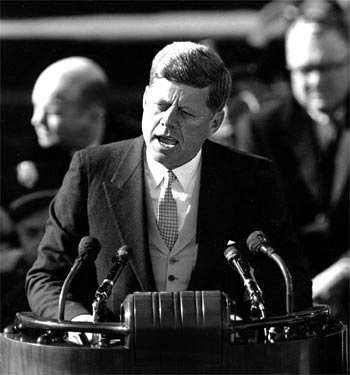
Last Wednesday (Jan. 20) was the 50th anniversary of John F. Kennedy’s inauguration, when he sent forth that clarion call to all Americans: “Ask not what your country can do for you; ask what you can do for your country.”

At the moment he spoke, I was but 10 weeks old, so I do not claim to remember a thing. But I grew up with those words in my household; the call to service to the country resounded throughout my childhood and led me, two and a half decades later, to serve as a Peace Corps volunteer in Kenya.

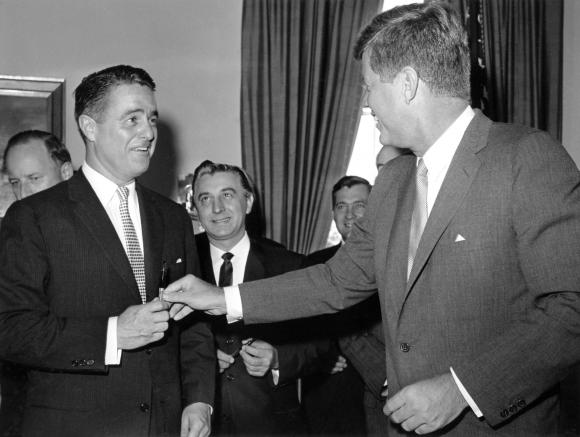
Earlier this week, the man who founded that marvelous organization, R. Sargent Shriver Jr., died at the age of 95. I never met the man, but I knew of him – I think every Peace Corps volunteer hears his story, not only of his work in founding Peace Corps, but also of his tireless work on behalf of the poor, his founding of Head Start, his work with his wife, Ethel, to found and run the Special Olympics, and all the other marvelous things Mr. Shriver did in his life.

I’ve been thinking of President Kennedy and Mr. Shriver a lot this week, and feel again that renewed call to serve the people of my country, to help make this nation a better place in which to live, to care for all of the people here.

Then I juxtapose that call with what took place in the House of Representatives Wednesday, the vote to repeal Health Care Reform, and I have to wonder: How does this serve our country?

Yes, the Republicans made a promise to their constituents that they would hold this vote. Yes, there are many who believe that Health Care Reform is wrong (and possibly evil, if you listen to some of the out-of-control rants on radio, TV and social networks).

But how does repealing that which will give Americans decent health care serve those same Americans? How does it answer President Kennedy’s call to serve each other?

I suppose, if you broke down President Kennedy’s challenge, you could make the argument that mandating health care for all is too much of the country doing for you, and not enough of you doing for the country.

I suppose it is possible to claim that government has no business in health care.

But if you were to make either of those arguments, you also would have to concede that Medicare, Medicaid and Social Security are wrong as well. And surely you would have to concede that government – which exists to provide for the security of its people – has no business providing that security. And if you concede those points, then wouldn’t you have to give up your Medicare, your Medicaid, your Social Security?

Now there is speculation that Senate Republicans will try to force a vote on repealing health care, not necessarily because they believe it is the right thing to do, but because they want to score political points. Republican Leader Mitch McConnell assures Americans that he will force such a vote, possibly employing delaying tactics on other bills, possibly by offering a motion to suspend the rules, which is an attempt to shut down the Senate.

What concerns me most is that the effort to repeal Health Care Reform is a repudiation of all that is

good in and about this country. Repealing it would say, in clear terms, “We don’t care about the least of our brothers and sisters. If you can’t make it on your own, go away.”

And in a week in which we mourn the loss of one great man, and celebrate anew the words of another, it seems petty and cruel to try to take away health care from those who really need it.

Somehow, I don’t believe either President Kennedy or Sargent Shriver would approve of that.

X X X

This column was written for the Episcopal Cafe (www. episcopalcafe.com) Daily Episcopalian.

Share this:
Share this page via Email Share this page via Stumble Upon Share this page via Digg this Share this page via Facebook Share this page via Twitter

Boldly and provocatively proclaiming God

A sermon preached on 2 Epiphany, Martin Luther King weekend, at St. Stephen’s Episcopal Church, Heathsville, Va.:

“Look, here is the Lamb of God.”

John the Baptist, the last of the Old Testament prophets, who has been preaching and teaching, calling the world to repent, to turn back to God … John, who baptized Jesus in the River Jordan and saw the Spirit descend like a dove … John the Baptist now boldly proclaims exactly who Jesus is, and exactly what Jesus is: The Lamb of God, the Son of God

This is John’s Epiphany proclamation, celebrating what Diana Butler Bass calls “God made manifest to the whole world.”[1]

And it was because John made this statement – not once, but twice, because sometimes, we all know, once is not enough – that Andrew and another of John’s disciples went off to spend time with Jesus, so that they, too, could see God made manifest in this world.

But first, Andrew, being Andrew — you know, the disciple who never quite understands what he is supposed to do, so he specializes in bringing others to Jesus? – first Andrew went to his brother Simon and made the same bold proclamation that John had made:

“We have found the Messiah.”

John had an epiphany – an aha! moment – and he boldly proclaimed that epiphany to the world.

The Spirit pointed him to Jesus, and he in turn pointed others to Jesus.

Andrew had an epiphany – an aha! moment – and he boldly proclaimed that epiphany to his brother.

The Spirit, through John, pointed Andrew to Jesus, and he in turn pointed Simon to Jesus.

That’s what Epiphany – the season of Epiphany – is all about, my friends.

God made manifest in the world is pointed out to us, and in turn, we point out God to others.

First we are told – and then we tell others – that, as Ms. Butler Bass says, “God (is) no longer a distant God or only the God of the ancient Israelites – but that God is, indeed, visible to all who open their eyes.”[2]

How have our eyes been opened?

And how are we opening the eyes of others?

• • •

Last Friday, I listened to a segment on NPR that focused on the Rev. Dr. Martin Luther King Jr., whose birthday we celebrate this weekend. The discussion centered on Dr. King’s “I Have a Dream” speech of August 28, 1963, delivered at the Lincoln Memorial in Washington, D.C. That speech, according to civil rights leader Julian Bond, was an eye-opener – it was an epiphany — for many Americans at that time, because, Mr. Bond said, it answered the question of why a civil rights movement was needed.

For many of us now, that question may seem like a no-brainer: Of course the civil rights movement         was necessary. In 1963, people of color were still treated as only five-eighths human in many parts of     this country! But, as Mr. Bond pointed out, most people in this country at that time were unaware of       just how bad life was for people of color. Dr. King’s speech, he said, was an epiphany for those who       were listening, because for many of them, it was the first time they heard the truth spoken, the first         time they learned that this nation needed fixing.

You know that what Mr. Bond says is true. You lived through those years. You remember what it was     like. And after Dr. King’s speech, which opened your eyes along with the eyes of many others, your         generation responded. I know this, because you have told me it. My generation says thank you. Thank   you for hearing and responding to Dr. King’s truth.

Speaking the truth – boldly, provocatively declaring that truth for all to hear … this is our call in the world today.

Just as John had to point out to his own disciples that the Messiah of whom they dreamed was already in their midst …

Just as Dr. King had to point out to his own countrymen that there were still dreams to be accomplished in this land …

… So we are called to point out to this broken world that God’s dreams can still be accomplished in this world.

This is our call in the world today: To make God manifest to all whom we encounter, to all who have ears to hear and eyes to see.

We are the ones who, like Andrew, are to call others to God, to show God to everyone, by our words and by our deeds.

Boldly and provocatively.

In all that we do and all that we say.

And right now, my friends, the world especially needs us.

Because right now, my friends, the world needs to see the light – it needs to bathe in the light that is God made manifest.

We all know about the tragic events that took place in Tucson eight days ago. We all know about the six people who were killed and the 14 others who were wounded.

And unless we’ve had our heads completely buried in the sand, we all know that within hours of the shootings, a vitriolic debate broke out in this country as to who was responsible, as to who and what caused a mentally ill young man to lose touch with reality – to lose touch with God’s reality of love – and to do great physical harm to innocent people standing outside a grocery store, and great psychological damage to the world.

Fingers were pointed, and blame was assessed.

Most of that blame centered on the tone of our public debate, and how it has become so caustic, so pain-filled, so damaging to our souls.

But that is not what lies behind the attack. The shooter himself is a mentally ill young man, suffering from his own delusions and in serious need of help.

What makes these tragic events an epiphany moment for us is that our eyes and our ears have been opened to the fact that somehow, somewhere, we have lost the ability to proclaim love in this country.

To know this is true, all you have to do is turn on your radio and listen to the screaming matches that masquerade as “talk shows.” Or switch on your TV and watch as people denigrate and attack each other, all in the name of “commentary.” Or, if you’re brave enough – which I am not, I must tell you – you can look at Twitter. But be forewarned: If you do so, you will need to bathe afterward, because Twitter is filled with filth.

Or take a look at Facebook: Just last week, on one of those days when 49 of the 50 states had snow in them, a woman on facebook proclaimed that she wanted to “castrate” public school officials for canceling school before a single snowflake had fallen. She wanted to castrate someone because he had inconvenienced her!? I have to tell you, my first thoughts were, Do you even know what you are saying? Do you know how to do this? Have you ever done this?!?!?

The tragedy in Tucson is our epiphany, our great Aha! moment, showing us that all of us – all of us – have participated in some way in harming each other’s souls with damaging, derisive, deragatory words.

Oh, we may not have said anything awful … I pray that not one of us here has ever said anything awful. … But … I also know we all drive on the roads around here! And we all sometimes say things that damage not only our souls, but the souls of others.

Even when we refrain from saying bad things, from making damaging comments, we still have allowed others to say those things – and to get away with them.

We haven’t stood up against the evil that all this represents. We haven’t called out those who spew hatred, we haven’t tried to turn those people to love.

But now, because of those shootings in Tucson, many of us are re-examining our lives, we are re-examining God’s call to us in our lives, and we are saying, “Enough! Basta! No more! This is not what God calls us to say or do!”

We have had our Epiphany.

Jesus has been pointed out to us again – because sometimes, you know, once really is not enough.

And now we are called to point out Jesus to others.

It is time for us to do as John the Baptist did, to proclaim, boldly and provocatively: “Look, here is the Lamb of God!”

We are the ones who are called to go out into the world – again and again – and proclaim, by word and deed, that the Lamb of God is in our midst.

We are the ones who are to proclaim God made manifest not just in our midst, but in the midst of all the world.

It’s Epiphany, people!

It’s time for us to make proclamations!

Bold ones!

Provocative ones!

We have to be like John the Baptist.

We have to be like Dr. King.

If we want to change the tenor of the debate in this country – and by God, we should want to do that – then we have to be the ones who do it! With our own lips first. With our own lives first.

But we can’t stop there.

We have to call others on their comments, when their comments go too far, when their statements serve only to divide and denigrate.

Whenever our souls are damaged, you had better believe the souls of others are being damaged as well.

And it is up to us to keep that from happening.

The love of God has been manifest in our lives.

How are we making God’s love manifest in the lives of others?

How are we proclaiming, boldly and provocatively, “Look, here is the Lamb of God!”?

Amen.


[1] Diana Butler Bass, “Gabby opened her eyes, may we also open ours,” http://blog.beliefnet.com/christianityfortherestofus/2011/01/gabby-opened-her-eyes-may-we-also.html#ixzz1B1prID7o, 14 January 2011

[2] Ibid.

Share this:
Share this page via Email Share this page via Stumble Upon Share this page via Digg this Share this page via Facebook Share this page via Twitter

Words of hatred, words of grace: We must choose

A column written for McClatchy-Tribune News Service

By Lauren R. Stanley

The other day, I received a phone call from the garage where I had had my car worked on twice in two weeks. I was already on the phone, so I couldn’t take the call. But as soon as possible, I listened to the message, fearing something else was wrong with my car.

“Hi, this is …,” the owner of the business said. “You had your car back for service last week. Just calling to say thank you for bringing it back. Thank you.”

That’s it: Just a quick message meant to build a relationship with a new customer.

That’s the level of discourse I would like to see in this country – a simple “thank you” – rather the diatribes that fill the airwaves and jam the social networks.

Especially right now, in the aftermath of the Tucson shootings, vitriol dominates our lives. Fingers are pointing and awful  words are being said about the shootings, about who said what that might have incited a mentally ill young man to kill  six and wound 14 others.

But our need to harm each other, to sear each other’s souls with words of hatred, isn’t limited to the shootings.

If you listen to the ubiquitous talk shows, you know what I mean. There, words of hatred are shouted hourly, threats are  made daily. Vitriol is the currency, and we have only ourselves to blame, for we are the ones who listen, who support, who participate.

Or look at Facebook, where seemingly innocuous events cause people to declare their desire to “castrate” someone (that was for a snow closing), to put others in the “cross-hairs” (those generally center on politics), to “get” yet another person who has somehow disappointed or displeased us.

And dip into – if you dare – Twitter, where people threaten each other daily. I pray that those who Tweet are not seriously considering acting upon their threats, but who knows these days?

If nothing else, the shootings in Arizona have shown that we have lost the ability to communicate with kindness.

In our rush to comment, we have forgotten how to set a guard over our mouths, how to keep our tongues for evil and our lips from speaking deceit, as the Psalmist warns us.

We have forgotten that as beloved children of God – which all of us are, whether we like it or not – the writer of Proverbs warns us that we must watch over our mouths and our tongues if we want to keep out of trouble. Rash words are like sword thrusts, Proverbs says, but the tongue of the wise brings healing.

The writer of Ephesians follows up on that: “Let no evil talk come out of your mouths, but only what is useful for building up, as there is need, so that your words may give grace to those who hear.”

“Give grace to those who hear …”

Would that that were happening right now in this country particularly.

What has happened to us that we have forgotten how to give grace, how to speak words that build up? Why are we so eager to blame, to hurt, to disparage? And when … when? … did we stop teaching people to be careful with their words?

This is not a diatribe against anyone in particular on the left or the right. This is not about politics, or gun control, or even the appalling lack of care for those who are mentally ill.

This is a discussion – I hope, I pray – about how we can find our way to being decent to each other.

We spend an inordinate amount of time disparaging others and speaking words of violence (really, who in the world wants to castrate someone over a snow closing? Does the person who wrote that even know how to do that? Or what it means?). We curse, we threaten, we denigrate, we abuse, we attack. We use words to hurt, to injure, to wound.

Why?

What purpose does it serve? It might make us feel better in that moment, but when we look  at what we have wrought – an atmosphere of hatred – do we still feel better then?

St. James wrote, “With (the tongue) we bless the Lord and Father, and with it we curse those who are made in the likeness of God. From the same mouth come blessing and curing. My brothers and sisters, this ought not to be so.”

St. Peter added, “Those who desire life and desire to see good days, let them keep their tongues from evil and their lips from speaking deceit.”

Our words, our comments, have meaning and they have impact. When we choose to speak dark words, are we really surprised when darkness envelops us?

But when we speak words of grace, healing results. Isn’t that what we want in our own lives? And if so, isn’t that what we should want in the lives of others?

It really isn’t that hard to speak words of grace. A simple “thank you,” such as the message left for me by the business owner, can be so powerful.

If we want to improve our lives, and the lives of those around us, if we want to heal our ailing world, first, we need to guard our mouths.

Share this:
Share this page via Email Share this page via Stumble Upon Share this page via Digg this Share this page via Facebook Share this page via Twitter

Blinded by the wrong vision …

Preached at St. Paul’s Episcopal Church, Bailey’s Crossroads, Va., on the Third Sunday of Advent.

My friends in Christ, Father James has asked me to speak this morning to all of us gathered here, which means that part of this sermon will be in English, and part will be in Spanish. I need to tell you that my Spanish, while good, is nowhere near as strong as it could be … so I ask you to bear with me on that … please.

Mis amigos en Crist0, Padre James me ha pedido hablar esta mañana a todos los que estamos aquí reunidos, lo que significa que parte de este sermon sera en Ingles, y una parte sera en español. Perdoname, pero yo quiero ustedes sepan que mi español no es muy fuerte. Pero voy a tratar de ser claro para que puede entender lo que estoy tratando de decir, de acuerdo?

Bueno …

En el nombre de un solo Dios, Padre, Hijo y Espiritu Santo. In the name of one God, Father, Son and Holy Spirit. Amen.

How often do we look at something and decide we know what it means, that we understand what we are seeing – only to discover, later, that we were wrong?

Con que frecuencia nos fijamos en algo y decidimos que saben lo que significa, que entendemos lo que estamos viendo – solo para descubrir, mas tarde, que nos equivocamos?

How often do we look at something we have typed on our computers and miss the typos?

For many years, I was a newspaper editor. Part of my job was to design  each page of the paper, to decide what story went where, what the  headlines would say, how big the pictures would be.

Cuando yo trabajaba como editor de un periódico, una parte de mi trabajo era diseñar cada página, para decidir qué historia fue que, lo que los titulares que dicen, lo grande que las fotos serían.

Every night, before we put the newspaper to bed (as we used to say),  several of us would gaze at the front page, reading every word of every  headline, desperate to make sure that there were no errors.

Todas las noches, varios de nosotros se vería en la primera página, la lectura de cada palabra de cada título para asegurarse de que no hubo errores.

But some nights, no matter how hard we tried, we would still get it wrong.

Pero algunas noches, no importa lo duro que lo intentamos, que todavía se equivocan.

Like the night there was a helicopter crash, and despite the fact that 10 of us – TEN of us – read the headline before we went to press, all 10 of missed the fact that I had spelled helicopter H-E-L-P-I-C-O-T-E-R – HELPICOTER.

Al igual que la noche que escribe “helicóptero” como “helpicotero.” Que era malo.

And then there was the lawyer in town whose name I could not spell correctly no matter how hard I tried. Every time I put Mr. Snyder’s name in a headline, everyone would look it over to make sure it was right. Yet … three times in one year, instead of spelling his name S-N-Y-D-E-R, I managed to make it –S-Y-N-D-E-R. Mr. Snyder later married my best friend … and told me I could NOT help with the wedding invitations, thank you very much.

O las tres veces que me indicación de su nombre un abogado de forma incorrecta en la pagina primera. Que era malo.

We all make these mistakes.

Todos cometemos estos errores.

We all look at something and decide – sometimes consciously, sometimes unconsciously – that we know what we are seeing.

Nos fijamos en algo y decidir que sabemos lo que estamos viendo.

Many times, we are wrong.

Muchas veces, nos equivocamos.

Many times, we are only seeing what we want to see … not the truth that is standing right there in front of us.

Muchas veces, sólo vemos lo que queremos ver … no la verdad que está de pie justo delante de nosotros.

That is the problem from which John the Baptist suffers in this morning’s Gospel.

Ese es el problema de que Juan el Bautista sufre en el Evangelio de esta mañana.

John is in prison, put there by Herod for exposing the truth about Herod. He knows he’s in real trouble, and that he probably will die for having stood up to the powers-that-be.

Juan está en la cárcel, puesto allí por Herodes por decir la verdad … y Juan va a morir porque le dijo la verdad sobre Herodes.

In his last days, John seems to be trying to make sense of his life. He is, after all, the one who came before, to proclaim the coming of the Messiah. He is the one who told us – just last week, if you remember:

But one who is more powerful than I is coming after me; I am not worthy to carry his sandals.

Juan quiere dar sentido a su vida. Recuerde, él es el que proclama la venida del Mesías. Él es el que dijo, la semana pasada, recuerde:

Pero aquel que es más poderoso que yo viene detrás de mí, yo no soy digno de llevarle las sandalias.

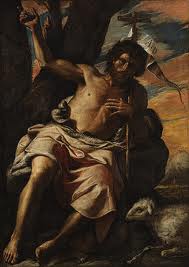
And furthermore, John proclaimed as he faced down the St. John the Baptist Preaching (ca. 1650),

Pharisees and the Sadducees — the ones he branded the “brood of vipers”:                                Mattia Preti (1613-1699),

He will baptize you with the Holy Spirit and fire. His winnowing Metropolitan Museum of Art, New York

is in his hand, and he will clear his threshing floor and will gather his wheat into the granary; but the chaff he will burn with unquenchable fire.

Y además, Juan proclamado como se enfrentó a los fariseos y los saduceos – los que marca la “generación de víboras”:

Él os bautizará con el Espíritu Santo y fuego. El tenedor aventar está en su mano, y limpiará su era y recogerá su trigo en el granero, pero la paja la quemará con fuego inextinguible.

That was John’s vision of who the Messiah would be: a powerful person.

Esa fue la visión de Juan de que el Mesías sería: una persona poderosa.

That was John’s vision of what the Messiah would do: he would cleanse the earth of the unworthy ones, get rid of those who did not meet John’s high standards.

Esa fue la visión de Juan de lo que el Mesías iba a hacer: iba a limpiar la tierra de los indignos, deshacerse de los malos.

John had a vision, all right.

Juan tuvo una visión, seguro.

A vision of fire and brimstone, of judgment day, of the worthy ones being received and the evil ones cast out.

Una visión de fuego y azufre, del día del juicio, de los dignos de ser recibidos y los malos arrojados.

The problem was, John’s vision blinded him to the vision.

El problema era que la visión de Juan le cegaba la visión.

And because of that blinding vision of his own making, John, the last Old Testament prophet, could not see that the one he himself had proclaimed was right there in front of him.

Juan, el último profeta del Antiguo Testamento, no podía ver que la que él mismo había proclamado estaba allí frente a él.

He sent word to Jesus:

Are you the one who is to come, or are we to wait for another?

Él le preguntó a Jesús: ¿Eres tú el que ha de venir, o debemos esperar a otro?

You know that Jesus had to be shaking his head when he heard this question:

Am I the one who is to come?

John!

You’re my cousin!

You have seen what I have done!

The blind see. The lame walk. The lepers are cleansed. The deaf hear. The dead are raised. The poor have good news brought to them.

John … what more do you want?!

Ustedes saben que Jesús tuvo que ser moviendo la cabeza al oír esta pregunta:

¿Soy yo el que ha de venir?

Juan!

Usted es mi primo!

Usted ha visto lo que he hecho.

Los ciegos ven. Los cojos andan. Los que tienen lepra son sanados. Los sordos oyen. Los muertos resucitan. Los pobres se les anuncian las buenas nuevas.

Juan … ¿qué más quieres?!

• • •

What more do you want?

How often is John’s problem our problem?

How often does our vision blind us to God’s vision?

We decide to see the world the way we want to see it.

But in doing so, we miss the world the way it is.

And worse, we miss the world that God wants us to see.

¿Qué más quieres?

¿Con qué frecuencia es el problema de Juan es nuestro problema?

¿Con qué frecuencia nuestra visión nos ciega la visión de Dios?

Decidimos ver el mundo como queremos verlo.

Pero al hacerlo, perdemos de vista el mundo tal como es.

Y lo peor, echamos de menos el mundo que Dios quiere que veamos.

God does not call us to see the world as we want to see it.

God calls us to see the world as it is.

And then … then … God calls us to see the world as it can be.

As God wants it to be.

Dios no nos llama a ver el mundo como queremos verlo.

Dios nos llama a ver el mundo tal como es.

Y entonces … entonces … Dios nos llama a ver el mundo como puede ser.

Así como Dios quiere que sea.

To quote Robert F. Kennedy (who was, actually, paraphrasing George Bernard Shaw[1]):

Some people see things as they are and say why? I dream thing that never were and say, why not?[2]

God wants us to ask, “Why not?”

Roberto F. Kennedy solía decir:

Algunas personas ven las cosas como son, y se preguntan ¿por qué? Yo sueño cosas que nunca fueron y digo, ¿por qué no?

El Buen Señor nos quiere preguntar, “¿Por qué no?”

This is what you are doing in this parish right now.

You are looking at the world around you – at your immediate community – and you are asking yourselves, “Why not?”

Why not create a new vision for this parish?

Why not discern a new way to serve graciously your neighbors and all seekers who come through your doors?

Why not develop a neighborhood ministry that bears God’s hope to Bailey’s Crossroads?

Esto es lo que está sucediendo en este iglesia ahora.

Ustedes están mirando al mundo alrededor de ustedes – en su comunidad inmediata – y que se pregunten, “¿Por qué no?”

¿Por qué no crear una nueva visión de esta iglesia?

¿Por qué no discernir una nueva manera de servir amablemente a sus vecinos y todos los solicitantes que pasan por sus puertas?

¿Por qué no desarrollar un ministerio de barrio que tiene la esperanza de Dios a Bailey’s Crossroads?

In this discernment process, with your vision of embracing all people, you are living into God’s vision for what the world can be and should be.

Con su visión de abrazar a todas las personas, que viven en la visión de Dios por lo que el mundo puede ser y debe ser.

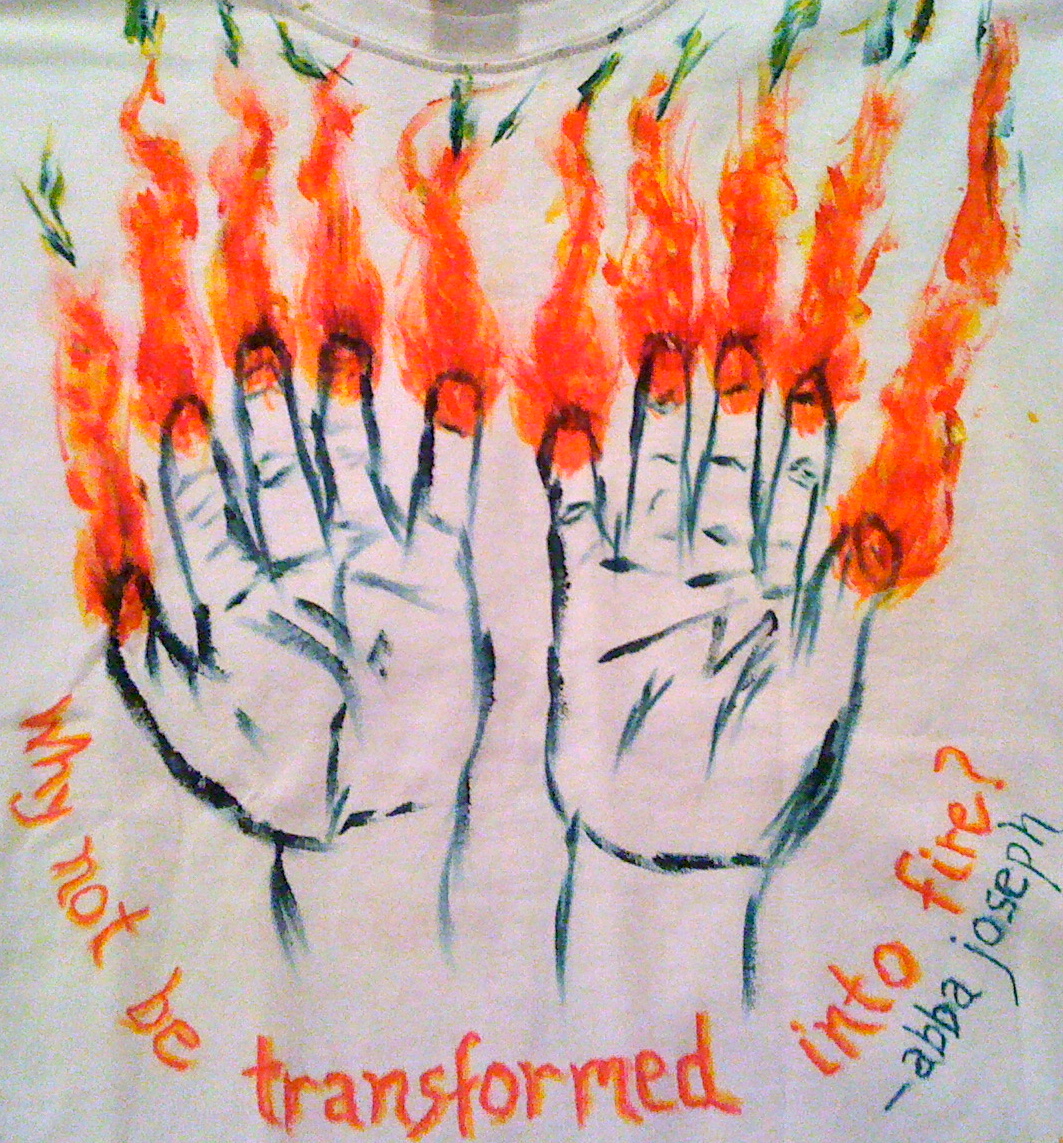
You are like the monk who went to Abba Joseph and asked, “What more should I do?”, to which Abba Joseph replied, as his fingers became like 10 lamps of fire,  “Why not be transformed into fire?”[3]

You are being transformed …

You are refusing to be like John, who in the isolation of prison let his vision imprison him.

Instead of being blinded and imprisoned by your own vision, you are opening yourselves up to God’s vision … of who you are … and of who you can be.

Ustedes están siendo transformados …

Ustedes se niegan a ser como Juan, que la cárcel que su visión encarcelarlo.

En lugar de ser cegado y encarcelado por su propia visión, ustedes están abriendo a sí mismos hasta la visión de Dios … de quien ustedes son … y de quién ustedes pueden ser.

In this season of Advent, we are called to set aside our vision of the world so that we can see God’s vision … a vision of incredible, radical, eternal love.

En este tiempo de Adviento, se nos llama a dejar de lado nuestra visión del mundo para que podamos ver la visión de Dios … una visión del incredible, radical, eterna amor.

We don’t want to be like John the Baptist, who was so focused on his own vision that he was blinded to the vision.

We want to see the vision, Jesus’ vision … of a world where the blind are made to see, and the deaf to hear, and the lame to walk, and the mute to sing with joy …  where the lepers are cleansed and the dead are resurrected and the poor do receive the Good News.

No queremos ser como Juan el Bautista, que estaba tan concentrado en su propia visión de que era ciego a la visión.

Nosotros queremos ver la visión, la visión de Jesús … de un mundo en el que los ciegos se hacen para ver, y los sordos oyen, y los cojos anden, y el silencio para cantar con alegría … donde los que tienen lepra son sanados y los muertos son resucitados, ya los pobres reciben la buena nueva.

That’s Jesus’ vision.

That’s God’s vision … for each of us and for all of us.

Esa es la visión de Jesús.

Esa es la visión de Dios … para cada uno de nosotros y para todos nosotros.

Now is not the time for us to blinded by what we have seen.

Now is the time for us to see what God wants us to see.

A vision of the world as it can be.

Ahora no es el momento de que cegados por lo que hemos visto.

Ahora es el momento para nosotros para ver lo que Dios quiere que veamos.

Una visión del mundo tal y como se puede.

Why not?

¿Por qué no?

Amen.

[1] George Bernard Shaw, Back to Methuselah, 1921.

[2] Robert F. Kenney, speech at the University of Kansas, 16 March 1968.

[3] The Wisdom of the Desert: Sayings from the Desert Fathers of the Fourth Century, Thomas Merton, New Directions Books, Norfolk, CT, 1960, p. 50.

Share this:
Share this page via Email Share this page via Stumble Upon Share this page via Digg this Share this page via Facebook Share this page via Twitter

Wise words on Haiti

New York Times columnist Nicholas D. Kristof has an excellent column in this morning’s paper on Haïti.

His message: Help is more than emergency aid. Haïti needs jobs and trade and education as well.

“Ultimately.” he says,  “what Haïti most needs isn’t so much aid, but trade. Aid accounts for half of Haïti’s economy, and remittances for another quarter — and that’s a path to nowhere.

“The United States has approved trade preferences that have already created 6,000 jobs in the garment sector in Haïti, and several big South Korean companies are now planning to open their own factories, creating perhaps another 130,000 jobs. …

“Let’s send in doctors to save people from cholera. Let’s send in aid workers to build sustainable sanitation and water systems to help people help themselves. Let’s help educate Haïtian children and improve the port so that it can become an exporter. But, above all, let’s send in business investors to create jobs.

“Otherwise, there will always be more needs, more crises, more tragedies, more victims.”

The whole article can be found here.

Share this:
Share this page via Email Share this page via Stumble Upon Share this page via Digg this Share this page via Facebook Share this page via Twitter

Who said anything about ‘gentle’?

I woke up this morning with Advent on my mind.

I was replaying in my head messages from friends and various Advent resources calling this moment in our lives a time of “gentle waiting.”

“Gentle waiting!” I thought. “Why are we engaged in gentle waiting?!?”

I’m fear that we are trying to tame Advent when we make this call. And I don’t think Jesus wants us to do that.

We need to give them clean water.

I mean, what’s gentle about the Gospel lessons we hear in this season? Jesus tells us to keep awake, therefore, for we do not know on what day our Lord is coming. (Do we really imagine that the owner of the house was waiting gently for the thief to come in the night?)

Paul says now is the time for us to awake from sleep, for salvation is nearer to us than before, and commends us to put on the armor of light. (Who puts on armor and then sits gently?)

John the Baptist bellows, “Repent, for the kingdom of heaven has come near.” (How can we prepare the way of the Lord and make his paths straight if we aren’t doing something?)

Nowhere in those statements do I hear anything about gentleness.

Advent’s  a wakeup call, all right. But it’s an urgent one. It’s a rough shaking of the shoulder to get us out of bed to do something. This is not your mother leaning over you and gently saying, “Wake up, my love ….” This is Jesus calling, and he’s grabbing you and shaking you and throwing back the sheets and yelling, “GET UP!!!! We have things to do!”

And looking at the world around us, we know that is true. We DO have things to do.

There’s the DREAM Act to be passed. And Don’t Ask, Don’t Tell to be repealed. Unemployment benefits need to be extended.

The people in Sudan need our prayers and our advocacy, to prevent yet another war.

The people in Haiti need our help to fight cholera and build a nation devastated by the earthquake.

Those who are sick need our help.

There are hungry people everywhere whom we need to feed, thirsty people who need clean water from us, ailing people who need our medicine and our care. There are children who need our love. The blind desire to see, the deaf want to hear, the mute yearn to sing with joy.

None of these things will be accomplished by gently waiting for someone else to step up. We are the ones who are to make the paths straight.

Advent for me is a time for action. It’s a time for us to look at the world around us and ask, “Is this really what we want to give to Jesus as a birthday gift? A world where so many have so little and we allow that?”

I woke up this morning with Advent on my mind, all right.

The call I heard was crystal clear: “Get cracking! Do the work you’ve been given to do – now! There’s no time to wait for someone else to do the work. Hurry! It’s Advent! Do something!”

Share this:
Share this page via Email Share this page via Stumble Upon Share this page via Digg this Share this page via Facebook Share this page via Twitter

An Open Letter to the Members of Congress

Dear Ladies and Gentleman:

I write to you today on behalf of the people of the United States of America. I do not actually claim to speak for all of my fellow Americans, but I do know that many of us feel the same.

As you prepare for the new Congress, with a Republican-led House, a Democratic-led Senate and a Democrat in the White House, please remember these things:

First, you work for us.

You work for all of us.

We do not work for you.

Obviously we are not your immediate constituents. But in reality, we are. Because we are the citizens of this country, and you are the legislative power of this country. So please, when you are doing your work in Washington, remember that anything you do for your own constituents affects the rest of us, your national constituents.

Second, stop playing games.

We the people do not really want your strutting, your posturing, your gamesmenship. Just as productivity is important in our workplaces, just as we are rewarded when we meet goals at work, we expect you to be productive, too. Running the country is not a game; it is your job. It is your duty. It is your privilege.

So stop the games. We do not care one whit about you scoring points. Scoring points is not what we elected you to do. We elected you – each of you and all of you – to work. So get to it!

Third, remember us! I know you may think you are remembering us, but trust me, when you talk about rescinding health-care reform without a plan to replace it that is based in reality, not on partisanship, we the people are not pleased. You know why? Because we know that you have the best health-care in the world, and that more than 50 million of us don’t. Don’t talk to us about your ideas on health-care if you plan to leave 50 million of us hanging in the wind – yet again.

Remember, too, that we are the ones who are feeling the pain right now. Those of you who oppose extending unemployment benefits? Get real. Your gamesmenship means many of us will not have enough to eat, cannot pay our bills, and may lose our homes. For you this is a “matter of principle,” although we cannot figure out which principle it might be. For us, this is bottom-line reality: No more unemployment benefits, we’re in deep trouble. Stop balancing your principles on our backs.

Fourth, get real. Do not talk to us about balancing the budget and getting rid of wasteful spending and then demand that we extend the Bush tax breaks to the richest people – at an estimated cost of $700 billion over the next 10 years! Please. We are not stupid. We can do the math ourselves. And in doing that math, we can see that adding to the deficit will not end the deficit.  When 40 of the richest individuals in the United States publicly say you should to tax them more, when Warren Buffett says it is time to end the free ride for the richest, listen to them! Should you extend the tax breaks for the middle class? Yes. But for the richest, who only have gotten richer in the last decade? No. They’ve had their free ride, they’ve received their riches, they do not need more. You know why? Because there’s no such thing as trickle-down economics. When the rich get richer, they simply get richer. And we know that.

Finally, please, please, please: Respect us in the morning. We the people are not stupid. Obviously, many of you think we are. You think you can pull the wool over our eyes. But you cannot. We are paying attention, we do understand what’s going on, and we will hold you accountable.

It is time for you to step up and do the jobs we the people gave to you. We the people do not want to hear any more excuses. We do not want to hear you blame “big government” when you are that big government. We do not want any more posturing, any more points-scoring.

What we want is for you to work on our behalf.

We the people put you there, and we want you to remember that.

So get to work, please. Play your games some other time.

X X X

The Rev. Lauren R. Stanley is an Episcopal priest in the Diocese of Virginia who served for five years as an overseas missionary.

McClatchy-Tribune New Service

Share this:
Share this page via Email Share this page via Stumble Upon Share this page via Digg this Share this page via Facebook Share this page via Twitter

Do not lose hope – we shall have new life

Joel 2:23-32

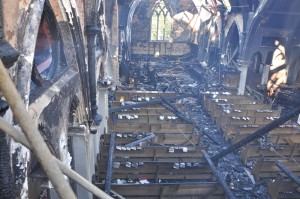
On Friday afternoon, about 4 p.m., Immanuel Chapel at Virginia Theological Seminary burned down. Within minutes, the entire chapel was on fire. Within an hour, it was gone. By nightfall, the walls were all that remained standing – although the fire department warned that they could yet collapse.

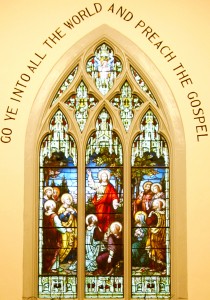
The historic Great Commission window in the VTS chapel, before the fire.

Most of the windows, many given by graduating classes, are gone, from the great stained glass depiction behind the altar with the inscription Go Ye Into All the World and Preach the Gospel, which inspired thousands of worshippers and had its Robert E. Lee-look alike St. Peter, to the great Tiffany window of St. Paul testifying in chains. Some windows melted, some exploded. All that is left are jagged openings from which many of us watched water pour as the firefighters fought the two-alarm blaze. On Saturday, we learned that apparently, the six-toed Jesus at the back did survive after all.

The altar rail that was sent from Liberia in the late 1800s is gone, as is the altar table and the organ, which seemed to burn for hours.

Everything in the sacristy was destroyed, from the patens and chalices and old, time-worn prayerbooks to “Anna Baptist,” the baby doll that thousands of us used to learn how to baptize children.

Gone, too, is the pulpit, from which were spoken great soaring sermons meant to inspire us and not-so-great sermons given by preachers who were literally quaking in their boots, and which many of us thought would collapse a few years ago on Martin Luther King Jr. Day when Bishop Michael Curry of North Carolina pounded and swayed and called us yet again to realize the dream not of Dr. King but of our Lord Jesus Christ.

Immanuel Chapel, the home in three-year cycles for thousands of seminarians for the past 129 years, the place that nurtured us and then sent us into the world to preach the Gospel, is no more.

This is a time for great mourning among the Seminary community. It is a time of great sadness.

But already, the community is giving thanks.

Thanks that no one was in the chapel at the time and thus no lives were lost. Thanks that none of the dozens of firefighters were injured. Thanks that none of the surrounding buildings were damaged. And yes, thanks that the great cross still towers above the ruins.

And already, it is a time for the community to dream.

To dream of the new chapel that will rise from those ashes. To dream of better access and better bathrooms. To dream of the unknown possibilities that make up those dreams, and that inspire us to new heights, not just of how to glorify God through our worship, but how to glorify God with our lives.

It is as though the prophet Joel were writing this morning just for those of us who loved that Chapel.

“Then afterward,” Joel wrote – meaning after the great calamity which in his day was famine brought on by an invasion, either of real locusts or of the locusts known as Babylonias –  “afterward,” the Lord says, “I will pour out my spirit on all flesh; your sons and your daughters shall prophesy, your old men shall dream dreams, and your young men shall see visions.”

VTS Chapel after the fire.

In other words, God says to us through the prophet Joel, despite the calamity of your life, do not lose hope.

In other words, God says, do not let the tragedy overcome you. Overcome the tragedy instead, because I the Lord am pouring out my Spirit upon you, because your young are prophesying and seeing visions, and your old are dreaming dreams.

Even in the midst of despair – over an economy that will not get its feet back under itself, over wars that are claiming thousands of lives, over injustice and oppression in Sudan and Congo and Zimbabwe, over enduring desperation and a sudden, deadly outbreak of cholera in Haïti, over hatred in the Middle East and oil spills in the Gulf of Mexico, over stubborn unemployment and devastating housing foreclosures – even in the midst of all that can send us plummeting into the pit of despair, we are not to give up. We do not lose hope.

Because God’s spirit is pouring over us, and because we are prophesying and dreaming and seeing visions, and therefore, we shall overcome. We shall have new life. That is where God’s Spirit, which is being poured out abundantly over us, leads us: to new life.

But only if we live into those prophecies, those dreams, those visions.

My friends, let’s be plain here: This is our calling in life. To take the gifts God gives us in the Spirit – the prophecies, the dreams, the visions – and to make them happen.

We – who are the beloved children of God – we – who are created in God’s image of love and community – we – who are created to live in love and in community – we are the ones who are especially called to make God’s dreams for us come true.

This is not someone else’s call … it is not up to someone else to work on God’s behalf.

It is our call.

It is our mission.

It is, in fact, why we were created.

• • •

I need you to know that I am a missionary. For the last five years, I have served as your missionary in both Sudan and Haïti. I have been an Appointed Missionary of the Episcopal Church, which means I represented you and the entire Episcopal Church wherever I went, whomever I served.

And because I am a missionary, mission is important to me. But I tend to define “mission” a bit differently than most people, because for me, mission is not simply about going into the world, it is not merely about doing things.

For me, “mission” is a way of being.

It is how we live our lives as beloved children of God.

“Mission” encompasses every aspect of our lives, every action we take, every word we speak, even the thoughts we think.

Our mission in life is the result of God creating us in God’s image, and declaring us the beloved.

You see, when God created the heavens and the earth and the birds of the air and the fishes of the sea and the animals of the land, God brought forth man and woman in God’s very own image. God did so not because God needed us, but because God wanted us. Remember, we are not necessary to God – and we know that, because God was before we were, and God will be after we are, so we can’t possibly be necessary to God. Which means that God loved us into being. So the image of God is that of love. And because we are Trinitarians, believing in the Father, Son and Holy Spirit, always together, never apart, God’s image is that of community.

So we are created in love and community to live in love and community.

The dance of the Trinity

All of which means that each of us is and all of us are God’s beloved children. I’m a beloved child of God. You are a beloved child of God. And you. And you. And you. And you. You are the beloved. We are the beloved.

Our mission, therefore, is to love. Not just the people and the things we like. Not just the people and the things we know. But all of God’s creation. As fully, as wildly, as radically, as inexplicably, as eternally as God loves us.

We want to make those prophecies and dreams and visions, the ones that come from God and are God’s gift to us … we want all those things to come true?

We have to start with love. And we have to always act as God’s beloved. And we have to always remember that everyone else also is God’s beloved.

If this is how we live our lives, if we always begin and end in love (no matter how hard that is), when tragedy and calamity hit, we will be fine. Not because we are immune – for we are not. But because we know how to move forward. We know that God loves us, and because God loves us, God gives us the prophecies, the dreams, the visions we need to continue bringing God’s love to the world.

God who loved us into being is pouring out God’s Spirit upon us. As the beloved, we have the prophecies, we are dreaming the dreams, we are seeing the visions.

Our job, our mission, is to bring those prophecies and dreams and visions to life. To make them happen. God doesn’t give us everything we need so that we can ignore it. God gives us everything we need so that God’s dream for us can come true.

That seminary chapel that burned down on Friday? The one where I was formed as a priest, where I learned to baptize (with dear Anna Baptist, that unregenerate baby doll), to celebrate and marry and bury people? It is gone now. But the love that built that place, the love that made it a holy place of God? That love remains. And because the love remains, the community will move forward.

We are God’s beloved.

Don’t ever forget that.

Amen.

A sermon preached on the 22nd Sunday after Pentecost, Proper 25, 24 October 2010, Year C, at Grace Episcopal Church, Goochland, Va.


Share this:
Share this page via Email Share this page via Stumble Upon Share this page via Digg this Share this page via Facebook Share this page via Twitter

God is depending on us

Luke 18:1-8

There are times when our Lord Jesus Christ is trying to teach us something and to do so, he tells us a parable – and then he pretty much leaves us to figure out what the parable means in all its aspects, and we often end up … confused.

This morning is one of those times.

The parable of the Widow and the Unjust Judge is one most of us have heard before. Jesus tells his disciples to pray always

The Widow and the Unjust Judge

and not to lose heart, and then illustrates that command with a parable that at first blush seems to back up his instructions.

But then we take a deeper look at it, and we think, “Wait a minute.”

Are we being told that God doesn’t answer our prayers unless we storm the gates of heaven, that God pays no attention to the first time, the second time, the third, the fourth, the fifth time we pray?

Are we being told that God is like this unjust judge, who only gave in to the widow because he didn’t want a black eye (that’s the literal translation from the Greek of “wear me out”)? That God only answers our prayers in order to avoid being publicly embarrassed (as if that were even possible)?

At first blush, those do seem to be the points of the parable.

Thankfully, the parable is about neither of those points.

We do not need to storm the gates of heaven repeatedly, hoping that eventually, God will pay attention. (God hears us the first time we pray.) And we do not need to worry about whether God is just or unjust. (We know God is just, because if God were not just, God would not be God.)

This parable, my friends, is about the kingdom of God on earth. It is about God’s will being done. It is about God’s justice reigning in this world.

Only by turning this parable over and focusing on the widow and what she does in the face of great injustice do we figure that out.

You see, in the days when our Lord Jesus Christ walked the earth, widows had nothing. They had no rights – no right to speak in public, no right to property, no right to testify in a court of law. Everything their husbands owned went to the husbands’ male relatives. If those relatives didn’t like the widow, or were greedy and wanted everything for themselves, they could throw the widow out on the street, and there was little the widow could do about it. Because widows had no rights. They had no one to speak for them. No one to stand up for them. No social safety net. No women’s center. No pro bono lawyers – no one.

The widow in this story? It’s obvious that she was all alone. There was no one was standing up for her. She wasn’t getting any justice from her husband’s family … that’s why she was going to the judge repeatedly. No one was taking her side – that’s why she argued before the judge alone. But even when that fool of a judge – and he was a fool, because he wasn’t even smart enough to fear God and he had no respect for anyone in the community – even when he refused repeatedly to hear her case and give her the justice that God demands, the widow refused to quit.

She knew her rights, this widow, the rights that came directly from God. She knew that from the beginning and to the end of time, God was on her side. Throughout the Torah, the Law of Moses, God places special emphasis on caring for widows, orphans and strangers.[1] Eleven times in Deuteronomy alone, God commands his people: Take care of the widows, the orphans and the strangers.  So this widow knew: God was on her side. And no foolish judge was going to stop her from getting what God said was hers.

And therein, my friends, lies the real lesson of this parable:

Do not quit.

Even when the odds are against us, this parable teaches us that we are not to stop working for God’s kingdom, for God’s justice, for God’s love, for God’s hope.

Even when the kingdom seems out of reach, when there seems to be no justice in sight, or love to embrace, or hope to cling to, Jesus tells us to keep trying, to keep pushing. Because one day – one day – when enough people focus on God’s kingdom – and not their own; on God’s justice – and not society’s; on God’s inexplicable, eternal, wild, radical love – and not humanity’s limited, short-sighted, mean-spirited imitation of the same; when people embrace God’s incredible hope – and reject humanity’s hopelessness – when all that happens, God’s justice will roll down like waters and righteousness will flow like an ever-flowing stream.

No matter how hard it seems, Jesus is telling us, no matter how hopeless it seems … do not quit.

So why does Jesus tell us this in the context of a command to pray always?

Because in Jesus’ scheme of life, prayer is more than simply asking for something. Prayer is about doing something. It’s about doing those things for which we pray!

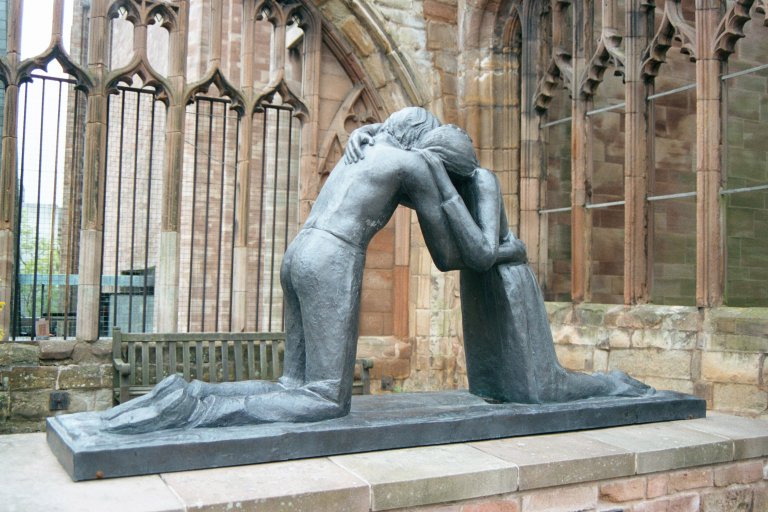
The Statue of Reconciliation, by Josefina de Vasconcellos. It sits amid the ruins of Coventry Cathedral, which was destroyed by German air forces during WWII. A replica of this statue was donated by the people of Coventry to the peace garden of Hiroshima.

It is not enough to simply ask God for peace in this world. If we want peace, Jesus says, we’re going to have to work for it. We don’t have peace in this world because there are far too many people who reject it. Those of us who want it, who pray for it, Jesus says, are going to have to work for it.

It is not enough to simply ask to God to watch over those in need this day. If we want people to have enough – not everything, but enough – we are the ones who are going to have to give them enough. This day!

Jesus tells us this parable so that we can understand: We have to actively work for that for which we pray, even when it seems hopeless. Because in God’s scheme of life, there is always hope. There is always justice. There is always love.

I know this. I have witnessed this.

For four years I served as your missionary in Sudan, a war-torn nation where more than 3 million people have died in the last 40-some-odd years of war, and another 5 million people have lost their homes. At one point in Sudan, someone was dying – either in civil war or as a result of civil war – every 6 seconds.

Every day, the people pray for peace. They’ve been praying for peace for decades. But they don’t simply ask God for peace and then sit around passively waiting for it. They work for it! Like the widow in today’s Gospel, they refuse to quit. The odds are against them, the world is pretty much ignoring them, their enemies are salivating over the chance to annihilate them. But they won’t quit working for peace.

Right now – facing yet another civil war that is threatening the lives of nearly 10 million southerners in that divided land – they are working for that peace they so desperately desire. This very day, the Archbishop of the Episcopal Church of Sudan is in this country, seeking the help of the U.S. government and the United Nations, so that they don’t face yet another genocide come January, when South Sudan will vote on whether to become an independent nation. Every day, our brothers and sisters in Christ in Sudan, who are related to us not by the blood of their birth but by the waters of their baptism, not only pray for peace. They work for it.

And this is our mission, too.

This is the mission of the Church:

To actively work for that for which we pray. Even when the world tells us it’s never going to happen. Even when the world conspires to stop us.

Our mission is to never give up.

Whenever we see an injustice, whenever we are encounter hatred, whenever we feel hope slipping away, Jesus says to us: do not quit. Do not give up.

We are supposed to be like the widow in today’s Gospel: Always striving for God’s kingdom, for God’s justice, for God’s love, for God’s hope.

God is depending on us.

Amen.

A sermon preached on the 21st Sunday after Pentecost, Proper 24, Year C, 17 October 2010,  at St. Anne’s Parish, Scottsville, Va.


[1] Exodus 22:22; Deut. 10:18, 14:29, 16:11, 16:14, 24:17, 24:19-21, 26:12-13, 27:19.


Share this:
Share this page via Email Share this page via Stumble Upon Share this page via Digg this Share this page via Facebook Share this page via Twitter