You are invited to the dance … whatchya gonna do?

The keynote address at St. Andrew’s Episcopal Church, College Park, Md., at their Homecoming Dinner, 10 September 2011.

A story from the 2nd century after Christ, of two monks in the Egyptian desert:

 A disciple went to Abba Joseph and said to him, “Abba, as far as I am able, I keep my little rule, my little fast and my little prayer. I strive to cleanse my mind of all evils thoughts and my heart of all evil intents. Now, what more should I do?”Abba Joseph rose up and stretched his hands to heaven, and his fingers became like ten lamps of fire. He answered, “Why not be transformed into fire?”[1]

Why not be transformed … into fire?

• • •

My friends, how many times have we been like the disciple seeking guidance from the Abba? How many times have we said, “Now, what more should I do?”

The disciple kept all the rules of the monastic community, what he calls the “little” things – not meaning those things of minor importance but rather his private disciplines. He followed the rules set out for each monk: good works, hospitality, moderation of the mind and mouth, humility, obedience, communal living and communal property, stability … His “little fast” was eating two simple meals a day, less in Lent and Advent … His “little prayer” was the private prayer time each monk was enjoined to have daily … He did his best to cleanse his mind and heart of evil thoughts and intentions …

In other words, the disciple was as faithful as he could possibly be.

But he sensed … somehow … that there was something more. Or rather, that there was something missing.

So he went to the Abba, the abbot, of the monastery, to Joseph, a holy man, who led the monks, who directed them in the lives and prayers, a man, the disciple was certain, who would know what more the disciple could do.

The answer Abba Joseph gave was, most likely, not the one the disciple expected.

Because rather than focusing on yet another thing to do, Abba Joseph urged the disciple to focus on who he could be.

“Why not be transformed into fire?” the holy man asked.

And why not?

Why not be transformed into fire?

Why not become something entirely new, something possibly uncontrollable, something all-consuming, something passionate?

Abba Joseph didn’t tell the disciple he had to stop doing the “little” things, because Abba Joseph knew those little things were important. After all, who can argue with good works … hospitality … moderation of the mind and mouth … humility … obedience … communal living and communal property … stability (imagine what our world would be like if we practiced all those things every single day … intentionally)?

Who can argue with eating a little less … intentionally?

Who can argue with daily prayer … especially if it is intentional?

And who, pray tell, would ever argue with cleansing our minds of evil thoughts, or cleansing our lives of evil deeds?

So the abbot, you see, wasn’t saying: Stop doing these things.

Instead, he was urging the monk to let those practices take him to the next step, the next practice … to transformation.

Like the inhabitants of Jerusalem whom the prophet Jeremiah addressed, proclaiming, Thus says the Lord: Stand at the crossroads, and look, and ask for the ancient paths, where the good way lies; and walk in it …” the disciple was standing at a crossroad.

Do more?

Be more?

Focus on doing the little things?

Let those little things transform me?

Isn’t this the same place where we find ourselves this night, this night when you as the people of St. Andrew’s celebrate your Homecoming?

Isn’t this night a crossroads for you, as it was for the disciple, as it was for the inhabitants of Jerusalem?

You are gathered here this night to celebrate who you have been, and you are gathered there this night to consider who you might be.

Your parish has been here for 121 years. You began your life together in a small room over Calvert’s Hall, with a mission “directly related to serving the students of the Maryland Agricultural College, now the University of Maryland at College Park.”[2]

You moved from Calvert’s Hall to a building that first was a tobacco barn, then a stable, then a Presbyterian church. You built this church in 1930, added a parish house in 1954, and built the parish hall in 1967.[3]

But this is not a night in which to focus only on what you have done.

And it is not a night to focus only on what you might do.

No, my friends, this night is the night for you to focus on who you can be.

You have done, and are doing, many marvelous things. You have taken, and are taking, care of the little things that are so important. You follow the little disciplines, you pray, you feast when you can, fast when you must, you provide hospitality, you pay your bills and you practice, as best you can, humility.

But still …

Is there something more?

Not something more that you can do …

But something more that you can be …?

• • •

Another story.

But first … some background.

For four years, I served as a missionary in Sudan, living in the town of Renk, in the northernmost portion of South Sudan, at that place where North met South, where Arabs met Blacks, where Muslims met Christians.

I arrived in Sudan three days before the peace agreement that ended Sudan’s third – and longest – and deadliest – civil war went into effect. I arrived at a time when Northerners and Southerners, Arabs and Blacks, Muslims and Christians still distrusted each other, still grew still in each other’s presence, still judged each other by the color of their skin, the language they spoke, the tribe to which they belonged.

The town of Renk, in the Diocese of Renk of the Episcopal Church of Sudan, was, throughout the 21-year civil war (the third, the longest, the deadliest civil war) a garrison town, meaning that at some point early in that war, the North took over the town, stationed thousands of Northern, Arab, Muslim soldiers (and their families) there, and made sure that the Sudanese People’s Liberation Army, the army of the South, had no ability to function – or to fight – there.

Being a garrison town means that Renk grew from a small village of Southerners belonging to the Dinka tribe to a small town peopled by members of more than a dozen tribes from North, South, East and West.

Because each tribe speaks a different language, and each tribal language has up to 100 dialects, the most common language in South Sudan is actually Arabic. Not because the Southerners want to speak that language, but because the North forced that language upon them.

Which means that disparate peoples from all over Africa’s largest nation had only one way to communicate: in the language of the oppressor.

So when I arrived, on July 6, 2005, it was obvious to me that the language I most needed to learn was Arabic. Or, to be more accurate, Araby souk, known by linguists as Sudanese Creole. (In other words, heaven forfend we should bother to conjugate a verb!)

Speaking Arabic meant I could communicate with everyone.

But speaking Arabic also meant that I faced tough questions and uncomfortable moments.

Because I deliberately did not identify with any one tribe.

That’s the background.

And now, the story:

About three years into my service, I was sitting on a log on a dusty street corner in downtown Khartoum, then the nation’s capital, drinking tea. (Tea and coffee shops in Sudan are not like tea shops in the United States. We’re not talking about Starbucks here. There are no nice seats, no air conditioning, no espresso machines or milk steamers, no wi-fi … just low-sitting stools and logs, a charcoal fire, water purchased from the latest donkey cart to go by, powdered milk …)

Several young men, all from the Dinka tribe, became upset when they heard me speaking Arabic.

Why, they demanded – in English, no less –Why was I speaking that language? Why wasn’t I speaking Dinka?

Because, I replied, Arabic is the language most people understood in Sudan.

Did I even know Dinka?

Yes, I said – in Dinka. I know some.

After they berated me for not knowing Dinka, the language of the people where I lived, they challenged me: “To which tribe do you belong?”

Now, this might not seem like an important question here in the United States, but in Sudan, this is a loaded question … very loaded. Declare the right tribe, and you had friend for life, who would stick by you and defend you, no matter what.

Declare the wrong tribe, and you could find yourself caught up in a long-standing tribal or ethnic or blood feud.

So I thought carefully about my answer:

I belong, I finally said, to the tribe of God, to the only tribe that matters.

• • •

Far too often in our lives, when we find ourselves standing at the crossroads, trying to decide whether to go right or left, forward or backward, we fall back on our tribal ways. We rely on the practice of TAWADDI – That’s the Way We’ve Always Done It (you know the old Episcopal joke, right? Change that light bulb? Change that light bulb? You can’t change that light bulb! My grandmother gave that light bulb!)

But in doing so, we forget …

We forget that the only tribe that matters is the tribe of God.

The color of our skin, the language we speak, our gender, our sexual orientation, our ethnicity … none of those things matter. Not to God. Those things are but accidents of history.

Because to God, each of us is … and all of us are … beloved children of God.

Which is what we need to remember … when we are standing at the crossroads of our lives.

Before we can decide what to do, we need to remember who we are, and we need to remember whose we are.

We are beloved children of God.

And we belong to God.

We know that we are beloved because God says so. God declared, in the very beginning, that we were to be created in God’s image. And what is God’s image, if it is not first and foremost that of love?

Our creation is not a matter of God’s need, for we are not necessary to God. We know that because God was before we were, and God will be after we are, so we simply cannot be necessary to God. Which means that God wantedus, that God desired us, that God loved us into being.

And isn’t that wonderful news?

To know that we are loved … from before time began, throughout our lives, and until the ages of ages?

Isn’t that what we all are seeking?

Love?

Let me be clear here: I tell this to every infant, every child, every adult I baptize. The most important thing about you, the most important thing you’ll ever need to know in your life is this:

God loves you.

God … loves … you. And you. And you. And you. And you.

As I’m walking each infant, each child, each adult up and down the aisle after the baptism, this is what I tell them.

God loves you.

And don’t you ever forget that!

The most important piece of your identity is this:

You are a beloved child of God.

Nothing else matters. Nothing.

So as we stand at the crossroads of our lives, before we decide to left or right, forward or back, we know who we are – we are the beloved – and we know whose we are: We belong to God.

But … (you knew there was a “but” coming, didn’t you?)

This identity does not exist in a vacuum.

Our identity comes with responsibility.

Because, you see, we are Christians.

Meaning that we believe, we profess, we confess that we believe in a Triune God, Father, Son and Holy Spirit. We believe, we profess, we confess the community of God.

Which means that being created in the image of God means that we are created in the image of community.

We, my friends, are created in love and community to live in love and community.

And that, my friends, is our mission in life.

To live … in love … and community … every moment … of our lives.

• • •

When the prophet Jeremiah spoke of seeking the ancient paths, he wasn’t saying that it was time for us to go back to what so many call the “good old days” that weren’t really that “good.”

No, Jeremiah was telling the inhabitants of Jerusalem that it was time to go even farther back … to the days when the people knew they were God’s beloved, and lived as though they were God’s beloved.

Jeremiah was taking the people back to that time when the Lord proclaimed,

“Before I formed you in the womb I knew you,

and before you were born, I consecrated you;

I appointed you a prophet to the nations. …”

Jeremiah is taking us back to the commands of the Lord:

“… for you shall go to all to whom I send you,

and you shall speak whatever I command you.

Do not be afraid of them, for I am with you to deliver you,” says the Lord.

Then the Lord put out his hand and touched my mouth;

and the Lord said to me, “Now I have put my words in your mouth.

See, today I appoint you over nations and kingdoms,

to pluck up and to pull down,

to destroy and to overthrow,

to build and to plant.”[4]

Lest anyone misinterpret these powerful directions, take a moment to think about them.

The command is go into the world (a command that would be reiterated over and over again, culminating with our Lord and Savior Jesus Christ’s command to do the same, at the moment of his ascension), the command to tear down that which gets in the way of God’s desires, God’s dreams for us so that in its place, we can build and plant that which fulfills God’s desires and dreams for us.

The late lay theologian Verna Dozier explained God’s dream for us; it is, she wrote, a dream of “a good creation of a friendly world of friendly folk beneath a friendly sky.”[5]

A “good creation of a friendly world of friendly folk beneath a friendly sky.”

Now, before anyone says (as one of my seminary classmates once did, with great disdain), “Friends? God wants us to be friends? That’s it?!” – he later was ordained), let me remind you: God’s definition of “friend” is not the same as that which most of us use for a definition.

Because when God talks about friendship, God is not talking about the casual acquaintance we may list among our friends. God is not talking about Facebook friends. No, in God’s mind, friendship, true friendship, comes when we abide with God and allow God to abide with us. True friendship is about living in God’s joy, which gives us joy.

On the night before he died for us, our Lord Jesus Christ said to his disciples:

This is my commandment, that you love one another as I have loved you. No one has greater love than this, to lay down one’s life for one’s friends. You are my friends if you do what I command you. I do not call you servants any longer, because the servant does not know what the master is doing; but I have called you friends because I have made known to you everything I have heard from my Father.[6]

So for Jesus … for God … friendship is not some easy-going, casual, let’s- barbeque-on-the-back-deck-and-have-some-lemonade-to-drink kind of thing.

For God, “friendship” is about commitment to each other (“abide in me as I abide in you”[7]). It is about accountability (“He has told you, O mortal, what is good; and what does the Lord require of you but to do justice, and to love kindness, and to walk humbly with your God?”[8]). It is about love (“As the Father has loved me, so I have loved you; abide in my love.”[9]) It is about obedience (“If you keep my commandments, you will abide in my love, just as I have kept my Father’s commandments and abide in his love.”[10]) And it is, truly, about joy – the joy we take in each other (“I have said these things to you so that my joy may be in you, and that your joy may be complete.”[11]).

• • •

Another story:

In World War II, a musician by the name of Larry LaPrise served in the European Theater. After the war, he and some friends moved moved to Sun Valley, Idaho – before it became Sun Valley, really – to ski and sing and work the after-ski crowd in that gorgeous mountain setting.

LaPrise and his friends formed a band called the Ram Trio that entertained the crowds coming off a day of skiing. One of the songs he wrote – or so the story goes – is one that all of us know: The Hokey-Pokey.

You know this song, right? Most of us have sung it and danced to it, usually as kids and then again, for some unknown reason, at weddings.

It goes like this:

You put your right hand in,

you put your right hand out,

you put your right hand in and you shake it all about.

Then you do the Hokey Pokey and you turn yourself around.

That’s what it’s all about.

And you know how the rest of the song follows:

You put your left hand in, then your right leg, then your left leg, then your right side, then your left side (and then, if you want to draw this song out to its extremes), you put your nose in, your backside in, and then your head, and finally … finally! What do you do? … You put your whole self in.

The words “Hokey Pokey” come from the words “hocus pocus,” which most of us know are the words you speak when you’re doing magic. The words “hocus pocus” comes from the Latin phrase, Hoc est corpus meum – “This is my body,” the words the priest speaks when he or she elevates the bread during the Eucharist. In the old days, when the priests would celebrate in great stone cathedrals, they would turn their backs to the people (because that was how it was done in those days), and sign the Mass: Hoc est corpus meum. Their voices would reverberate throughout the cathedrals, and as the echo moved throughout the stone churches and cathedrals, what they would be signing – Hoc est corpus meum – would sound like Hocus pocus (drawn out).

From that term – hocus pocus – LaPrise came up with the Hokey Pokey (although there are some who claim that the song and dance existed in England during the war). In 1949, LaPrise and the Ram Trio recorded the song (now later, there was a lawsuit from people in England who claimed it was their song, but the suit was settled out of court, and that’s another story), and the song soon became nationally known.

• • •

How many of you have ever been to a wedding or a party where the Hokey-Pokey was played?

And how many of you have been called upon to participate in this dance? You may not have wanted to participate, but heck, everyone else was up there, so why not? So someone from the dancing group comes along, and grabs your hand, or waves at you extravagantly, and pretty soon, you’re up there putting your right hand in, and taking your right hand out … right there with the rest of the folks.

Pulled in, whether you wanted to dance or not.

Being a beloved child of God, created in love and community to live in love and community, means that you have been chosen.

Remember the words of Jesus:

“You did not choose me, but I chose you.”[12]

God chose you … each of you … each of us … to participate in the dance, the perichoresis, of the Holy Trinity.

British theologian Alister McGrath defines perichoresis as that which “allows the individuality of the persons to be maintained, while insisting that each person shares in the life of” of others.[13] Now, McGrath and other theologians use perichoresis to describe the interpersonal relationship of the Holy Trinity.

But since we are created in the image of the Holy Trinity, of God the Father, God the Son and God the Holy Spirit, we, too, are created to dance in the what McGrath calls the ‘community of being’ … .”[14]

This dance, this perichoresis, is why we were created.

It is the very reason for our existence.

We who have been chosen are chosen, we are appointed “to go and bear fruit, fruit that will last … I am giving you these commands so that you may love one another.[15]

This is our mission: to go into the world, to love one another as Christ loved us.[16]

As Christians, as members of the Body of Christ, as the living embodiment of Christ in this world, is about committing ourselves – every moment of our lives – to living out God’s desires for us.

Desires of friendship – true friendship.

Desires of love – true love.

Desires of community – true community.

Nothing more.

Nothing less.

Sister Joan Chittister, a well-known Benedictine nun, theologian, spiritual director, author, preacher and commentator, says it this way:

Thomas Merton spoke out against the Vietnam War. Catherine of Siena walked the streets of the city feeding the poor. Hildegard of Bingen preached the word of justice to emperors and to popes. Charles de Foucauld lived among the poor and accepted the enemy. Benedict of Nursia sheltered strangers and educated peasants. And so must we do whatever justice must be done in our time if we claim to be serious about really sinking into the heart of God. A spiritual path that does not lead to a living commitment to the coming of the will of God everywhere for everyone is not path at all. It is, at best, a pious morass, a dead end on the way to God.[17]

When we are standing at the crossroads of lives, individually and as a community, trying to decide whether to go right or left, backward or forward, we are called, as beloved children of God, to always choose God’s path, the one that is for everyone.

We who are blessed, we who are chosen, we who have been consecrated since before we were born … we are standing at those crossroads right now.

We know that we are God’s beloved.

We know that we belong to God.

God is stretching God’s hand out to us … right now … right here … in this place, inviting us into the dance.

It’s decision time.

The question is,

Whatchya gonna do?

Are you going to get up and participate in the dance?

As you think about your decision, remember:

We are all on a mission from God, a “journey to the common good,”[18] as theologian Walter Brueggemann labels it, a “a trek that all serious human beings must make, a growth out beyond private interest and sectarian passion”[19] to all of humanity, not for our sake but for God’s sake.

It is not always easy – there will always be nay-sayers, even among us. Choosing the ancient path, the one that will give our souls rest, is hard in a society, a world, that is all about getting ahead, all about making sure that you have more than the Joneses, all about getting-mine-and-I-don’t-care-if-you-get-yours.

Nobel Peace Laureate and Archbishop Desmond Tutu, speaking from his own experience about making the hard decisions and choosing the right paths, affirms for us that “the demonstration of love in action can take us to dangerous places. [But] our love and our own goodness compel us to make choices that self-preservation would eschew.”[20]

Or, if you like, listen to American essayist and poet Ralph Waldo Emerson, who says:

Whatever course you decide upon,

 there is always someone to tell you that you are wrong.

There are always difficulties arising which tempt you to believe

that your critics are right.

To map out a course of action and follow it requires courage.[21]

But, Tutu points out, “the onerous duty of ‘doing good’ disappears once we recognize that we have no need to impress God with our success. When we really grasp our own goodness, we realize that we have no need to ‘buy’ God’s approval. We are already loved. We are already accepted. When we can accept our acceptance, the texture of life changes. The fear that has held us hostage will release its stranglehold on us.”[22]

So the question we face, as we stand at the crossroads, once again is this:

Whatchya gonna do?

• • •

Tutu ends his book with a love poem, from God, to us. I want us to listen to this poem, written by one of the holiest men of our time, speaking on God’s behalf:

You are my child,

My beloved.

With you I am well pleased.

Stand beside me and see yourself,

Borrow my eyes so you can see perfectly. 

When you look with my eyes then you will see

That the wrong you have done and the good left undone,

The words you have said that should not have been spoken,

The words you should have spoken but left unsaid,

The hurts you have caused,

The help you’ve not given

Are not the whole of the story of you.

You are not defined by what you did not achieve.

Your worth is not determined by success.

You were priceless before you drew your first breath,

Beautiful before dress or artifice,

Good at the core.

And now is time for unveiling

The goodness that is hidden behind the fear of failing.

You shout down your impulse to kindness in case it is shunned,

You suck in your smile,

You smother your laughter,

You hold back the hand that would help.

You crush your indignation

When you see people wronged or in pain

In case all you can do is not enough,

In case you cannot fix the fault,

In case you cannot soothe the searing,

In case you cannot make it right.

What does it matter if you do not make it right?

What does it matter if your efforts move no mountains?

It matters not at all.

It only matters that you live the truth of you. 

It only matters that you push back the veil to let your goodness shine through.

It only matters that you live as I have made you.

It only matters that you are made for me,

Made like me,

Made for goodness.[23]

• • •

So … let’s go back to the Hokey-Pokey. Think again about the last part of the song:

You put your whole self in,

you put your whole self out,

you put your whole self in and you shake it all about.

You do the Hokey Pokey and you turn yourself around.

That’s what it’s all about!

Participating in the dance … putting your whole self in … is a commitment not to silliness but to God.

It is a decision to walk in God’s ways and delight in God’s will to the glory of God’s name.

Whatchya gonna do?

Are you going to accept the invitation?

Is anybody willing to dance?

(Stand up … everyone dance … first verse and last verse of the song.)

It’s up to you, folks.

You’ve been invited into the holy dance, the dance of love and community.

Whatchya gonna do?

Amen.


[1] From The Sayings of the Desert Fathers: The Alphabetical Collection. Translated by Benedicta Ward. Cistercian Studies Series, number 59. This is saying 7 of Abba Joseph of Panephysis and appears on page 103.

[2] From “History,” St. Andrew’s Episcopal Church, College Park, http://www.saeccp.org/history.php.

[3] Ibid.

[4] Jer. 1:4-10, NRSV.

[5] Verna Dozier, The Dream of God: A Call to Return (Cambridge, Mass.: Cowley Publications, 1991), 125.

[6]John 15:12-15, NRSV.

[7] John 15:4, NRSV.

[8] Micah 6:8, NRSV.

[9] John 15:9, NRSV.

[10] John 15:10, NRSV.

[11] John 15:11, NRSV.

[12] John 15:16, NRSV.

[13] Alister McGrath, Christian Theology, 325, emphasis added.

[14] Ibid.

[15] John 15:16-17, NRSV.

[16] John 13:34, Ephesians 5:2, NRSV.

[17] Sr. Joan Chittister, a Benedictine Sister of Erie, Pa., from Good for the Soul, http://www.csec.org/csec/sermon/chittister_4910.htm, sermon preached on 4 December 2005, accessed 9 September 2011, emphasis added.

[18] Walter Brueggemann, Journey to the Common Good, 2.

[19] Ibid.

[20] Desmond Tutu and Mpho Tutu, Made for Goodness: And Why This Makes All the Difference, Kindle locations 432-433.

[21] This quote is thought to have come from Emerson, although no source can be found.

[22] Tutu, locations 2266-2269.

[23] Ibid, Kindle locations 2359-2385.

Share this:
Share this page via Email Share this page via Stumble Upon Share this page via Digg this Share this page via Facebook Share this page via Twitter

Go ahead: I dare you. I double dare you!

Romans 13:8-14; Matthew 18:15-20

       ‎In the summer of 2003, I attended the General Convention of The Episcopal Church, out in Minneapolis. You all know that Convention – that’s the one where Gene Robinson’s election as bishop of New Hampshire was consented to by the Deputies and Bishops. If you remember, after the House of Deputies consented to Gene’s election, but before the Bishops voted, allegations of sexual misconduct were raised against Gene.

My job at General Convention is not to be a deputy but to be a reporter for the Diocese of Virginia’s daily newspaper, the Center Aisle. Because I spent so many years as a journalist, I also spend time as an informal adviser to the secular press who come to cover Convention and often don’t know very much about the Church, about who we are and what we believe, much less what we do.

When the controversy erupted over the misconduct allegations, I was but one of many Episcopalians trying to explain to the world that an allegation made between votes by the separate Houses was something new to us; that no, we actually did not have anything in our canons that covered this; no, we were not trying to hide anything from the world, and that yes, that we were investigating the allegations, for which we had a procedure.

       Forty-eight hours later, it turned out that the allegations were not valid, that Gene had not been involved in sexual misconduct, and the charges were dropped.

        Now, what was interesting is that as soon as that happened, my friends in the media rushed to ask, “What will you all do now? Will there be retribution against the person who made the allegations? Will Gene or the Church retaliate?” They were practically daring us to live out our revenge, our retribution, on the front pages of their newspapers and at the top of their newscasts.

         But we didn’t. We didn’t retaliate. There was no retribution. We simply asked forgiveness, gave forgiveness, sought understanding, and most of all, we loved.

         We did such a good job that a few days later, the Dallas Morning News, in an editorial, wrote:

         “…We have been struck by the calm and deliberative process the Episcopalians followed in reaching their conclusion. … Watching these Episcopalians of all beliefs reason their way through their disagreement on this issue could serve as a guidepost for the larger society. … Perhaps their thoughtfulness and mutual respect for one another on this issue will have a positive impact on how all of us Americans carry on our larger societal debates. At least we hope so.”

Now, I know that you, more than the majority of the Church, know how much pain the ultimate decision to consent to Gene Robinson’s election, and his subsequent consecration caused. You lost your home. You’ve spent the last four-and-a-half years in exile.

But you did not retaliate. You have not sought retribution. Instead, you have focused on the Gospel of our Lord and Savior Jesus Christ, who told us exactly how he wanted us to act as Church in this morning’s Gospel.

            Jesus says, If a brother or sister (and yes, he actually says “brother,” which in the Greek would include “sister,” and not just a “member of the Church”), if a brother or sister sins against you, go talk with him or her. Try to work it out.

            If that doesn’t work, Jesus says, go get one or two others, and all of you go talk to the one who has sinned against you.

            And if that doesn’t work, Jesus says, well, heck, tell the whole church (and here Jesus does say Church), and try to work it out in church.

            And if that doesn’t work, Jesus says, well, “let such a one be to you as a Gentile and a tax collector.”

            Now, most people believe that in this passage, Jesus is telling us, “If you can’t convince a person that you are right and he or she is wrong, cast that person out. Make him an outsider. Turn your back on her. Shun that person.”

             But I don’t believe that’s what Jesus means. In fact, I think that right here, Jesus is being both subversive and subtle. Because he certainly didn’t do what most people think he did. He didn’t shun Gentiles and tax collectors, did he?

            Remember, this is the man who healed the centurion’s servant, who was a Gentile. (Matthew 8:13) He was the one who casted the demons out of the two demoniacs in Gadarene, which was Gentile territory. (Matt. 8:28-34) He healed the daughter of the Canaanite woman, a Gentile, who wouldn’t take no for an answer. (Matt. 15:22-28)

            And did he not say that we are to “go … and make disciples of all nations (meaning, the Gentiles), baptizing them in the name of the Father and of the Son and of the Holy Spirit, and teaching them to obey everything that I have commanded you”? (Matthew 28:19-20a)

            Jesus treated Gentiles with love and compassion, not with hatred and condemnation. He did not exclude them. He welcomed them in, showered them with love, healed their sick, fed them, preached to them, prayed over them.

            And how did he treat the tax collectors? Well, you know all those examples I just gave you? They come from Matthew’s Gospel … Matthew, the tax collector, whom Jesus called to be one of his disciples, a member of the inner circle, (Matt. 9:9-13), who was sent out by Jesus (Matt. 10), along with the other 11 disciples, to preach, teach, pray with and heal.

            What I’m saying is this: When Jesus said to treat those who disagree with us, who sin against us, as Gentiles and tax collectors, he was not telling us to turn our backs on them, to disparage them, to make them outcasts. Not if the examples from Jesus’ own life and ministry are to make any sense to us.

            In essence, Jesus was saying, Go ahead. I dare you. I double dare you. Treat those people the way I do: Love them!

            If you read Matthew the way most people do, which I think is the wrong way, you end up excluding people. And you all know about that – because that’s what happened with you.

            But if you read Matthew the way I think Jesus intended for us to read it, then you end up loving people. You end up doing exactly what Paul says in his Epistle to the Church in Rome:

            Owe no one anything, except to love one another; for the one who loves another has fulfilled the law. The commandments … are summed up in this word, Love your neighbor as yourself.

            Love, Paul says, does no wrong to a neighbor; therefore, love is the fulfilling of the law.

           The great German theologian Karl Barth, in his commentary on this epistle, sums up Paul’s words this way: “Love of one another ought to be undertaken as the protest against the course of this world, and it ought to continue without interruption.”[1]           

            Even when people sin against us.

Imagine what would happen if we actually took Jesus at his word, if we actually took him up on his dare and dared to love people, no matter what? Imagine what the world would look like then?

You all already know what it looks like when people read Matthew as permission to exclude. And you all already know what it looks like when you read Matthew as an injunction to include.

Now imagine what would happen if everyone read Jesus’ words as a dare to love … Wouldn’t that be a protest against the course of this world?

We live in a society where partisanship is our way of life. Look at the gridlock in Washington, just across the river. Look at it! Our leaders – with a whole lot of help from the rest of us (and yes, we are just as guilty as the politicians and their staffs are) – can’t get anything done because everyone, it seems, is committed to excluding, to condemning, to making sure that our way is the only way.

Is anyone in Washington – anyonedaring to take Jesus up on his dare?

You and I both know there are some people who are attempting to do this, but louder, more strident voices are drowning them out.

Which is where we come in.

We, who follow Jesus, are the ones who are called to set the example. To say to others, “Wait. There’s a better way.”

To say, “Actually, Jesus didn’t mean we were to shut people out. Jesus wants us to love one another, and we can’t do that if we exclude them.”

And we are the ones who are called to love one another – again and again, no matter how hard that is, no matter how many times we want to walk away, no matter now many times others walk away from us.

           We are the ones who have to dare to stand up against the vitriol, dare to include those with whom we disagree, dare to be with those who do not like us, much less love us.

My friends, this Gospel, which so many have used to exclude and to hate, is really a command to include and to love. It’s an instruction manual about how we are to love one another even when we don’t like each other, even when others are pushing every button we have, annoying us, hurting us, making us feel like dirt. In Jesus’ eyes, none of that matters.

Because above all else, we are still called to love.

One person at a time, one community at a time.

Edward Everett Hale, a 19th century author, historian and Unitarian minister, points the way for us when he says:

I am only one.

            But I am still one.

            I cannot do everything.

            But still I can do something:

            And because I cannot do everything

            I will not refuse to do the something that I can do.[2]

Each of us, alone, may not be able to do much.

But all of us, together, can change the world.

Jesus is daring us to do that. In fact, he’s double-daring us.

To love.

Amen.

 Sermon preached on the 12th Sunday after Pentecost, Proper 18, Year A, at The Falls Church (Episcopal), Falls Church, Va., on 4 September 2011.


[1] Karl Barth, Commentary on the Epistle to the Romans, 492.

[2] Edward Everett Hale, “The One,” via Emergent Village Daily Communique, 29 August 2011.

Share this:
Share this page via Email Share this page via Stumble Upon Share this page via Digg this Share this page via Facebook Share this page via Twitter

Be transformed!

Romans 12:1-8

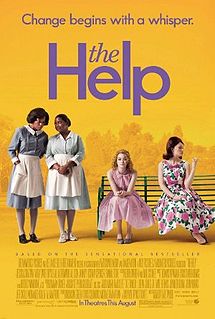
A few weeks ago, I read Katheryn Stockett’s beautiful novel, The Help, which came out a couple of years ago and just this month debuted as a movie.

It’s a beautiful book, my friends, telling the story of women, white and black, in Jackson, Mississippi, in 1963 and ’64, at the height of the civil rights movement. Despite the darkness of the story – and there was a lot of darkness at that time in the history of our country – it was so well told that when I finished, I simply … sighed … with satisfaction.

And then I heard that the movie was coming out and thought, “Hmmm. I think I want to see that.”

Until, of course, the movie actually came out, and the criticisms began to rain down as if from on high.

Yet another movie about white people telling black people’s stories, the critics said. Why do black people always need white people to speak for them? they asked. Don’t people realize that black people have voices too?

When I heard these critiques, I stopped for a moment and wondered: Have any of these people actually read this book?

Don’t they know that this book – I don’t know about the movie; I haven’t seen it yet – that this book is not just about a white woman telling the stories of black maids? That it is, in reality, a story about transformation?

Because that’s what the book really is, my friends. It’s the story of women – black and white – who in telling their stories realize that they are not bound by the story that formed them from before they were born.

It is a story about women – white and black – who realize they do not have to conform to the world in which they were born and raised.

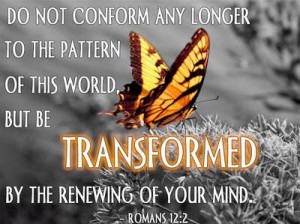
In the telling of their stories, these women are transformed by the renewing of their minds – by the setting aside of prejudices and hatred and fear – so that they indeed can realize what is good and acceptable and perfect.

The Help is the story of transformation from evil to good, from mistrust to love, from silence to bold proclamation.

And isn’t that what it means to be a Christian? To be transformed? To have our whole lives turned upside down and inside out so that we can then go out into the world and by our very lives, transform it?

Of course, you all don’t have to read this book or see this movie to know about transformation, do you?

For the past two-plus years, you’ve had Cynthia Gilliatt here with you as your priest, and if ever there was a person who refused to conform to the world, it was Cynthia. Like the women in the book, Cynthia refused to conform to a world that wanted to shut her down and shut her out.

I know the news of her death this week came as a shock to all of you, as it did to all of her friends and acquaintances around the Church. We had not known she was ill. We were not prepared for her death.

At Cynthia’s funeral yesterday in Harrisonburg, The Rev. Grace Cangialosi, a good friend and colleague, talked about Cynthia’s refusal to conform to the world., about her desire instead to not only be transformed by the Gospel herself, but to transform the world around her through the love of God in Christ Jesus.

And Grace talked about how Cynthia had paid the price for not conforming: About how the Church that ordained her would not let her serve fully as a priest for a long time, because … well, because, sometimes, the Church is stupid. Sometimes, the Church gets so caught up in the politics of the moment that it misses the person right in front of it.

Which is why, Grace said, Good Shepherd was so important to Cynthia – this place became a place for Cynthia to call home, a place for her to fully be priest, a place where you all were blessed to baptize two children, the grandchildren of parishioners, in a strong show of support for a couple who were concerned they might not be accepted everywhere by everyone. Those baptisms were holy for Cynthia, transformative, and she reveled in them.

•  • •

For the past five days, I have seen nearly 100 messages from people all over our Church, from all over our nation, through that lovely piece of social media, Facebook. All of the people talked about how Cynthia had transformed them by her presence, her courage, her grace. Cynthia, they said, lived what Paul wrote in this morning’s Letter to the Romans:

Do not be conformed to this world, but be transformed by the renewing of your mind, so that you may discern what is the will of God – what is good and acceptable and perfect.

Peter Gomes, the late preacher at Harvard, called this passage “perhaps the most dangerous verse in all the Bible.”[1]

Paul, Gomes said, “is telling his readers not to do that which comes naturally to them. An invitation to nonconformity is a dangerous thing, and thoughtful nonconformity … is all the more dangerous because nonconformity is an intention … [that is] likely to get one into trouble.”[2]

Cynthia didn’t conform – and it got her into some trouble. She knew that. She knew she could have gone along to get along, but that’s not who she was.

Instead, she chose to not only be transformed herself, but to devote her life to transforming others, so that the will of God would reign on this earth.

It wasn’t easy – and Cynthia knew that.

But faithfulness isn’t always about “easy” – it’s about doing what is right. And that is what Cynthia did – what is right, no matter how much resistance she met along the way. And she did meet resistance, when the Church was being stupid, and she paid a price for living her life with integrity. But she never quit, and she never conformed.

• • •

I have to tell you, there’s a new acronym in the Church these days: TAWWADI. It stands for: “That’s the Way We’ve Always Done It.” It’s a phrase some Church leaders are beginning to use whenever they run into resistance to change, resistance to new thinking, resistance to transformation.

TAWWADI’s cousin is But We’ve Never Done It That Way Before – which makes for an unpronounceable acronym but means the same thing. It doesn’t matter which approach the resisters take – we’ve always done it that way, or we’ve never done it this way – the fact is, that kind of resistance most often is rooted in conformity, in going along to get along, in refusing to take the chance that perhaps – perhaps – God has a better way.

Cynthia knew that God had a better way – for her, and for all the people around her. She knew she was called to priesthood, and that as a priest, she could live out a sacramental life, a Gospel life, and thus transform the world.

Theologian Paul Hiebert could have been talking about Cynthia when he wrote:

“The gospel is about transformed lives. When we bear witness to Christ, we invite people to a whole new life, not simply some modifications of their old lives. This transformation is radical and total. It involves changes at all levels of their culture, including their worldviews. It also changes them physically, biologically, psychologically, socially, and spiritually. This is the transformation that God works in them if they follow him.”[3]

Doesn’t that sound like Cynthia? Didn’t she invite people – didn’t she invite you – to a whole new, transformed life? She didn’t go along to get along – there was no TAWADDI in her life!

Because Cynthia was a Gospel person. She was transformed by it, and through it, she transformed others. And that’s quite a legacy to leave behind.

As you move forward, in these next weeks and months, with different clergy who will come to lead your services and care for you pastorally, I ask you to remember a few things:

First, I want to reassure you: Your bishop, your convocation dean and all of the leaders of this Diocese will be here for you. They will support you, they will care for you, they will love you, and they will help you move into the next stage of your transformed lives as children of God.

And second, please, I ask you – I beg you: Do not forget what it means to be transformed. For the last two-plus years, Cynthia Gilliatt has been with you, transforming you by word and deed. If you want to truly honor her, be as bold, as loving, as she was. Let the Gospel transform you, and then go out into the world, and transform it.

Tell the stories – tell your stories, tell Cynthia’s story, tell the story of you and Cynthia together.

Then tell the story – the story of God who loves you from before you were born, who loves you every moment of your life, and who will love you to the ages of ages.

Because in doing so, in telling these stories, you, like the women in The Help, and like Cynthia, will be transformed.

Amen.

Sermon preached at the Church of the Good Shepherd, Blue Grass, Va., on 21 August 2011, the 10th Sunday after Pentecost, Proper 16, Year A, in honor of The Rev. Dr. Cynthia Gilliatt, priest-in-charge who died on 16 August 2011.


[1] Peter J. Gomes, The Scandalous Gospel of Jesus. (New York: HarperCollins e-books),  Kindle Edition, 45.

[2] Ibid.

[3] Paul G. Hiebert. Transforming Worldviews: An Anthropological Understanding of How People Change (Kindle Locations 4598-4600). Kindle Edition.


Share this:
Share this page via Email Share this page via Stumble Upon Share this page via Digg this Share this page via Facebook Share this page via Twitter

Step away from the lawn mower …

Matthew 13:24-30, 36-43

More than half my life ago, after I graduated from junior college, I moved to Milwaukee to live with my brother and his family while I attended university. I hadn’t been there very long when the family went on vacation, leaving me in charge of the house, the dog, the yard and my sister-in-law’s vegetable and flower gardens.

I have to admit, while my family was gone, I probably wasn’t the best caretaker there ever was. So on the day they were due back home , I worked diligently – and frantically. I cleaned the house, and then worked outside. I weeded, I mowed, I edged. And when I was done, after several hours of hard work, I was pretty pleased with myself.

Until I looked over at one flower bed and discovered, to my great horror, a huge weed. A giant weed. A ginORmous weed. How could that have gotten there? I thought. And then I thought: How dare that thing grow in my sister-in-law’s beautiful flower garden?

So I restarted the mower, went over to that ginormous eyesore, and I mowed it into oblivion. Back and forth I went, making sure this … this … thing … was dead, dead, dead.

Then I went and got a trowel and I dug up the roots, removing every trace of this eyesore.

Just as I was satisfied that I had done a good job (no, really, it was a great job!), my family pulled up.

Out jumped my two nieces and one nephew, my brother and my sister-in-law.  I was hugging my nephew and chatting with my brother when I heard this terrible shriek from behind me.

“Mom! Where’s my straw plant?!?!?!?”

I looked at my brother and he looked at me, and then he looked at the lawn mower, at the flower bed, at his daughter (who by now was crying hysterically), at his wife, and finally, again, at me.

“Used the lawn mower, didn’t you?” he asked.

“Straw plant?” I whispered. “What’s a straw plant?”

“You had to use the mower, didn’t you?” my brother whispered back.

And then I heard my sister-in-law’s voice behind me.

“Lauren?” she said.  (That’s it. She didn’t say anything else. Just “Lauren?”)

I turned and walked across the yard, dragging my feet as I listened to my 6-year-old niece cry – actually, she was wailing – about her beloved straw plant and how it hadn’t grown while she was gone, and what was she going to tell her teacher when she went back to school.

“You used the mower, didn’t you?” she said in that voice that only a mother can use.

“Um, well … I used the mower to cut down a weed,” I said. “Really. It was just a weed. What exactly is a straw plant?”

“It looks like a weed,” she said. “And you cut it down. With the mower.”

“um ….”

“You used the mower to cut down Jennifer’s straw plant.”

My sister-in-law was not amused.

In fact, she was so not amused that the very next day, my brother and I found ourselves lugging railroad ties into the backyard and placing them around all the flower beds.

“I can’t trust you two not to use the mower,” my sister-in-law mumbled under her breath while she supervised us. “See something you don’t recognize and zoom! Mow it down! I swear, you two know nothing – nothing! – about gardening! I can’t trust either of you with my flowers, can I?”

The lesson I learned that day, the lesson I have never forgotten, was simple:

Do not presume that just because something looks like a weed, it is a weed.

Because there’s a very good chance that what looks like a weed to you is precious in the sight of others.


So don’t take a mower to it!

This is the same lesson that Jesus is trying to teach us in this morning’s Gospel lesson from Matthew: What looks like a weed to us very well could be precious in the sight of God.

Let’s go back to the parable for a moment: The word Matthew quotes Jesus using to name the weeds in the master’s fields – zizania – “in modern botanical terms refers … to wild rice grasses.”[1] But what Matthew is most likely talking about is something called darnel, which is prolific in Palestine. The problem with darnel is that you can’t tell the difference between that and real wheat until harvest time, when both plants have matured. Then, the darnel – bearing nothing life-giving for us – stands up straight and tall. The wheat, on the other hand, droops over from the weight of its life-giving grains.[2] So if you go out into the field before harvest time to weed? The chances are good that you will take out just as much wheat as weed.

So what Jesus is saying is that we have to be careful, to not take a mower to every weed we see, because there’s a chance that what’s a weed to us is precious to God.

Now, let’s be clear about one thing here:

Jesus is talking about evil in this parable, but he is not talking about Capital-E Evil. He’s not talking about injustice and hatred, intolerance and bias, disease and famine and violence and war and genocide. We know what that evil looks like, and we know what we’re supposed to do about those evil thing: we have to working against them and stop them, because if we don’t, then justice will never flow like waters and righteousness like an ever-living stream.

What Jesus is talking about are the smaller evils, the weeds that grow in us: greed, bias, hatred, the need to get ahead by leaving others behind. Anger, and the times we lash out at folks who pass us on the highway or make our jobs more difficult. Jealousy, because someone else has more than we have. Those are the weeds that grow in us all the time.

Those are the same weeds that we like to find in others all the time, don’t we? We love to tell others about their weeds.

But just because we think they’re weeds doesn’t mean God does.

So be careful. Be careful about rooting them out. And for God’s sake, don’t take a mower to them!

• • •

In a couple of days, I’m heading down to Alabama to lead a program for rising 7th and 8th graders at Camp McDowell, the diocesan summer camp. A friend of mine and I are going to lead a program focused on teaching the kids – all 185 of them[3] — that they were created for mission. That God, who created each of us in God’s image of love and community, created us to live in love and community. And that living in love and community is our mission in life.

I want them to learn that God created us to live lives of mission, every moment of their lives.

We’ve come up with a great name for our eight-day program: OMG, Y’all! On a Mission from God, Y’all! (Remember, this is Alabama …) We’re trying to teach these campers that because they are created in the image of God, the image of love and community, they are called to live in that image, to live in love and community every day. And that living in love and community is their mission in life.

But living our lives in love and community is hard. It’s hard, because we see people, we see things that are different, and we react as though that difference is bad, and next thing you know, we’re ready to take a lawnmower to those people and those things, never stopping to think that perhaps God sees things differently, and that what we thought were weeds are precious in God’s sight.

So one of the big lessons I want the campers to learn is this: Different is simply different. It is not better. It is not worse. It simply is different.

Meaning: Just because it looks like a weed to you, don’t – do not – take the lawn mower to it. Not just yet.

Because you never know:

It might just be precious in God’s sight.

So leave the mowers alone, OK?

Amen.

A sermon preached on the 5th Sunday after Pentecost, 17 July 2011, Proper 11, Year A, at St. Luke’s Episcopal Church, Hot Springs, Va.


[1] Elisabeth Johnson, Pastor, Watertown, Minn., “Commentary on the Gospel,” on http://www.workingpreacher.org/preaching.aspx?tab=4&alt=1, lectionary for July 17, 2011.

[2] Ibid.

[3] (or however many register this year)


Share this:
Share this page via Email Share this page via Stumble Upon Share this page via Digg this Share this page via Facebook Share this page via Twitter

Go. Baptize. Teach. Need I say more?

Matthew 28:16-20

Well, folks, this is it.

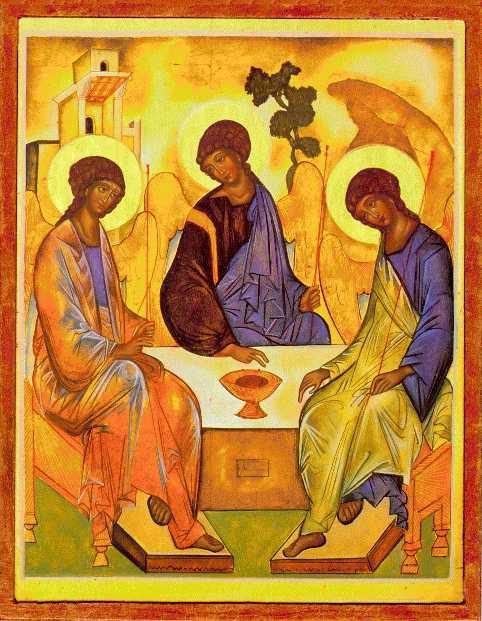
Rublev's Holy Trinity icon

This is the day when we celebrate the Trinity, that seemingly impenetrable mystery of Three in One and One in Three, something about which thousands and thousands, no, millions of words have been written and which many will tell you is impossible to completely understand.

But I have to tell you, if Jesus were here with us, he would probably be confused. Because for Jesus, the Trinity of the Father, Son and Holy Spirit is not a mystery, it’s not impenetrable, and it’s not his focus.

You see, Jesus understood the Trinity because he was one manifestation of the Trinity. So to him, the Three in One and One in Three makes perfect sense.

And if he were here today, he’d probably look at us and say, “Folks, this is not rocket science.”
And then he would wonder …

“Why aren’t you concentrating on that other trinity? You know, the one I gave you as I ascended into heaven?”

But before we go there, before we focus on what Jesus really wants us to focus on, let’s spend a few minutes on the part that Jesus says isn’t that complicated after all but others claim we can’t quite get.

We believe in God the Father, God the Son and God the Holy Spirit.

We believe in One God.

Before anyone tells you this whole concept is too mind-boggling, let me share with you the two easiest ways I know of to explain that Trinity:

(holds up clear glass bowl and glass with blue water)

This is God the Father, the Creator, who brought all things into being.

(pours blue water into bowl, then holds up glass with yellow water)

This is God the Son, who came to be one of us as one of us, who lived for us, who preached and taught and healed and then died for us.

(pours yellow water into bowl with blue water, which now turns green, then holds up glass with red water)

This is God the Holy Spirit, who inspires us, who literally gives us breath – when a baby is born, we all wait anxiously for that baby to breathe in that first breathe, to inspire that first breath – and who tells us what to say, when to say it, and how to say it.

(pours red water into bowl with green water, which now turns amber, then swirls the water around)

Now … you tell me:

Which is which?

Can you separate out God the Father from God the Son from God the Holy Spirit?

No.

Because they are all one.

My friends, that’s the Trinity.

Another way to explain the Trinity so that it makes sense to us?

I am a daughter. I am my mother’s oldest daughter, and even though my mother died nine years ago, I will always be my mother’s daughter.

I am a sister. I have seven siblings … two brothers, two stepbrothers, one step sister and two half-sisters. (It’s a complicated family, trust me.) No matter what happens to me in this life, when I die, my obituary will say that I have seven siblings.

And I am an aunt. I have 19 nieces and nephews, and seven great nieces and nephews, and I am their Aunt LoLo. And no matter what happens in my life, I will always be Aunt LoLo to them.

A daughter. A sister. An aunt.

So here’s the question:

How many of me are there?

One?

Or three?

As Jesus would say, “It’s not that complicated.” Because it’s not!

And again, if Jesus were here with us, he would ask us:

“Are you paying attention to that other trinity?”

You know …

The one where he stood on the mountaintop in front of his disciples and said:

Go make disciples.

Baptize them.

Teach them to obey.

….

Go.

Baptize.

Teach

That’s the trinity Jesus cares about.

Nowhere in the Gospels does Jesus spend any time worrying about and explaining how God the Father, God the Son and God the Holy Spirit are together, are one being, are God. To Jesus, it makes perfect sense. Just as me being a daughter, a sister and an aunt all at the same time makes perfect sense.

But Jesus does concentrate on that other trinity – Go. Baptize. Teach. – all the time.

Throughout his ministry, Jesus was constantly teaching us how we are to live our lives, what we are to do with our lives.

Go make disciples …

Jesus talked about it, he modeled it for us, he got into debates over it (remember Zebedee’s wife, trying to ensure that her sons, James and John, got the coveted seats at the right hand of Jesus in heaven? Remember all those debates with the Pharisees about healing people on the Sabbath? Remember how the Pharisees tried to trick him into saying blasphemous and illegal things about paying taxes and being sent by the Father? Remember how they railed at him for eating with prostitutes and beggars and fishermen?).

Jesus was very clear: If we are going to follow him, we cannot do so in a vacuum. We are not to be blind imitators, but active ministers – constantly modeling God’s love for everyone, wherever we go, so that they, too, can see God’s love in action and commit their lives to that love.

Baptize them …

Do you remember what happened when Jesus was baptized in the River Jordan? He heard God on high say to him: This is my beloved, in whom I am well-pleased.

Go baptize others, Jesus tells us, so that they can hear God’s voice as well, so that they can experience God’s love, so that they can commit themselves to that love.

Teach them to obey …

Jesus was a teacher. Pure and simple, that’s what he did: He taught. Every moment of his life, by word, thought and deed, he made sure that we understood what it was that God wanted us to do.

And the key thing he taught was that we are loved, and that we are to love. We are to love each other not just as ourselves – I’ve told you before and I’ll tell you again: There are some days when I don’t love myself very much, and on those days, I can tell you, it’s really hard for me to love anyone else – no, we have to love each other a whole lot more than that. We are called to love each other as Jesus loved us!

Which means we are the ones called to feed the hungry until there are no more hungry people in the world. We are the ones who are to give water – clean water – until everyone’s thirst is slaked. We are the ones who are supposed to heal the sick and raise the dead, comfort the prisoner and lift the poor out of poverty.

Not someone else, my friends.

Us.

This is our job, our way of life, because Jesus said so!

Jesus’ Trinity is not some convoluted, impenetrable mystery that sidetracks us from our calling in life.

Jesus’ trinity is the Great Commission.

And the Great Commission is our set of marching orders.

You want to know how to live your lives as followers of Jesus?

Look no farther than Jesus’ final words to his disciples.

Standing on that mountaintop, preparing to ascend into heaven, Jesus very clearly, very succinctly tells them – tells us:

Go make disciples.

Baptize them in the name of the Father and of the Son and of the Holy Spirit.

Teach them to obey all the commandments I have given you.

I’m telling you, this is not rocket science. This is not some esoteric debate about how to figure out the Three-in-One. Because Jesus is not interested in that kind of religion.

Jesus cares about, Jesus loves God’s people.

So, standing on that mountaintop, Jesus lays it all out for his disciples:

My work is done here. I’ve taught you everything you need to know, shown you everything you need to be shown, modeled a way of life for you, even modeled a way of death for you. Everything I’ve taught you, shown you, modeled for you? It’s all about love – God’s love for all of God’s beloved children.

Now it’s your turn, he says.

You go out into the world and love God’s people.

You show them how much God loves them.

It’s your job … your life … now.

You want to understand the Trinity on Trinity Sunday?

It’s as simple as this:

Go.

Baptize.

Teach.

Need I say more?

Amen.

A sermon preached on Trinity Sunday, 19 June 2011, Year A, at St. Paul’s, Bailey’s Crossroads, Falls Church, Va.

Share this:
Share this page via Email Share this page via Stumble Upon Share this page via Digg this Share this page via Facebook Share this page via Twitter

The little things …

Amazon Kindle 3

1 Peter 2:2-10

A couple of weeks ago, I went on a rather convoluted trip covering six states in 60 hours. This is what I do: I’m a missionary who travels constantly to preach and teach and witness.

Halfway through my trip, I discovered that I somehow had managed to lose my Kindle.

Y’all know what a Kindle is, right? It’s the Amazon e-reader that literally changed my life as a missionary. It kept me sane and kept me company when I was alone, a stranger in a strange land.

I’m very partial to my Kindle. I have about 400 books on it, and it has traveled the world with me. Partway through my travels, I realized I had left my Kindle on the plane.

I tried valiantly to get it back, I really did: I called the airlines, I filed a report, I went to baggage claim (where I found someone else’s Kindle, but not mine), I called Amazon, I even posted a note on Facebook (you know, just in case) … to no avail.

But my Kindle didn’t show up. And didn’t show up …

So I ordered another one, and pretty much gave up on ever finding the one that was lost.

Imagine my surprise, then, when last Wednesday I received an email from a man saying that his son had found my Kindle on the plane and had tried but failed to connect with me on Facebook. That morning, the teen-ager asked his father: Can you find the owner? He did.

The father and I had a marvelous conversation, not just about the Kindle but about our families and my service as a missionary and what I do and what he does, and where I’ve been and where he wants to go. In the end, I sold the once-lost-now-found Kindle to him for a severe discount, telling him that the balance of its worth was my gift to them, because they not only found my Kindle, they took the time and made the effort to track me down.

Then, because I’m a social creature, I shared my good news on Facebook.

The responses were astounding! People from all over the country commented, all seeing such good news in this story. This is wonderful, they said. You all are blessed! they gushed. This is a soul-to-soul connection, they wrote. This is not a co-incidence, one opined, but a “God-incident.”

Now … I know this story really only affects a few of us, and in the grand scheme of life it means very little. But for those of us involved, it is an important story. Because out of my carelessness, a new connection, a “soul-to-soul” connection has been established.

One little thing has brought us together – a family in Cincinnati and me, a missionary who gallivants all over the country on a weekly basis.

This, my friends, is what the Apostle Peter is talking about in his Epistle this morning … he’s talking about the little things of life, the little things we do not because we have to do them, but because we belong to God.

When Peter writes that we are “a chosen race, a royal priesthood, a holy tribe (that’s a better translation from the Greek than

The Apostle Peter

“nation,”) God’s own people,” he’s not talking about us saving the world single-handedly.

Peter is talking about us saving the world one little thing at a time.

Remember … Peter is writing this letter to people who thought Jesus was coming back any second now – only Jesus hadn’t come back yet. So Peter is instructing the people how they are to live until that moment happens.

Does this sound familiar?

Doesn’t this sound rather like what we just went through yesterday, with the alleged Rapture that Harold Camping and his followers told us was going to happen at 6 o’clock last night?

Now you and I can laugh and make jokes about Mr. Camping and his predictions.

But in Peter’s day, Jesus’ followers were just as confident as Mr. Camping’s followers that the Risen Lord was due back at any second.

And since the Risen Lord hadn’t come back yet, Jesus’ followers were a bit confused, and rather anxious, and a tad uncertain how they were to live their lives.

So the Apostle told them:

You are a holy tribe … you are God’s own people. Your job, your mission, is to live your lives in holiness.

In every little thing.

We live holy lives when we love one another as God loves us. Every word we say – or don’t say … every gesture we make — or don’t make … everything in our lives is to reflect God’s wild, radical, inexplicable, eternal love for us.

I know this sounds rather simplistic. But the truth is, those little things we think aren’t all that important? The ones we may be tempted to think don’t really matter … especially in the greater scheme of life? They are important and they do matter.

Because those little things add up. Those little things are the mustard seeds that start out so very small and grow … and grow … and grow … into huge bushes. Trust me, you plant a mustard seed and it will grow so big so fast that you’ll be astonished. You think kudzu is bad? Try mustard. It’s one of the little things.

Face it, my friends: We live in a world that does not support us in our calling as God’s own people, a holy tribe. We live in a world that tells us we have to get ahead – and leave others behind. That tells us we have to spend, spend, spend, buy, buy, buy … so that we can die with the most toys. That whispers that it is OK to forget those in need … because those in need? They’re not us.

But we are God’s own people.  We are God’s holy tribe. And we are not called to live our lives as society tells us. Because we are, as Father Michael said in his sermon a few weeks ago, homo eucharisticus, thankful people whose mission is to live lives of thanksgiving.

And we do that one little thing at a time …

We live lives of love because we are created in love. Remember: God did not need to create us. We are not necessary to God! God is necessary to us, but we are not necessary to God! We know this is true, because God was before we were, and God will be after we are, so we cannot possibly be necessary to God. Which means that God wants us, that God desires us, that God loves us into being.

And since that is how God created us – in love — that is how we are to live our lives: In love.

This is our calling.

This is our mission.

This is what it means to be a holy tribe. To be God’s own people. To be homo eucharisticus.

And it doesn’t matter what the world has to say about this, what society tries to teach us!

Every moment of our lives, because we are God’s own, we are called, in every little thing, to live in the same wild, radical, inexplicable, eternal love for others that God has for us.

And we know what God’s incredible love looks like, don’t we? We know the way and the truth that lead us to life.

By caring for those in need. Mourning with those who are mourning. Rejoicing with those who are filled with joy. Feeding the hungry. Giving water to the thirsty. Making the blind see and the deaf hear and the mute sing and the lame leap for joy! By proclaiming the year of the Lord not once every fifty years, but every year!

We know how to do this and we can do this!

But … we can’t do this all at once! We can’t just wave our hands and cure the world of all its ills. Because we are not God!

But we are God’s holy people.

And as God’s holy people, we can cure the world one little thing at a time.

We can live our lives in love, every single moment of every single day in everything we do, big, little or anywhere in between.

We can take the time to greet the stranger … and let her know she is welcome. We can let that person who is in such a great hurry on I-65 pass us … without saying a bad word, without making a gesture we will regret. We can, as Robert Fulghum once famously wrote in his book, All I Really Need to Know I Learn in Kindergarten: Hold hands crossing the street. Help little old ladies. Share your cookies. (You think sharing your cookies is not important? Let me tell you, I’ve lived in countries where we didn’t have enough to eat, and anyone who shared a cookie with you let you know that you deserved to live!)

We can hold this child Timothy Alexander, who was baptized this morning, and tell him, over and over again, that God loves him. That we love him.

We do not have to save the world all by ourselves.

That is God’s job.

Our job, our mission, is to save the world one little thing at a time.

You know … like returning my Kindle … even when you don’t have to.

Mother Teresa of Calcutta echoed Peter’s words when she said, “God does not demand that I be successful. God demands that I be faithful. When facing God,” she said, “results are not important. Faithfulness is ….”

In every little thing.

Mother Teresa even gives us guidance on how we are to live our holy lives:

‎”The good you do today,” she said, “may be forgotten tomorrow. Do good anyway.

“Honesty and transparency make you vulnerable. Be honest and transparent anyway.

“What you spend years building may be destroyed overnight. Build anyway.

“People who really want help may attack you if you help them. Help them anyway.

“Give the world the best you have and you may get hurt. Give the world your best anyway.”

You want to live as God’s holy people? You want to show the world what it means to be homo eucharisticus, to be God’s holy tribe?

Do good.

Be honest.

Help those in need.

Give the world your best.

Every single day.

In every little thing.

And if I ever lose my Kindle again?

I’d appreciate it if you’d return it to me.

Amen.

Sermon for the 5th Sunday of Easter, 22 May 2011, Year A, at Christ Episcopal Church, Bowling Green, Kentucky.


Share this:
Share this page via Email Share this page via Stumble Upon Share this page via Digg this Share this page via Facebook Share this page via Twitter

In defense of seminaries

(Written for Episcopal Cafe)

Tis the season for graduations, including those at seminaries across the United States. Within a matter of a few short weeks, Christian churches will be flooded with hundreds of new graduates, most newly ordained, to serve as ministers.

It should be a time of great celebration … unless, of course, you read Jerry Bowyer on Forbes.com. According to Mr. Bowyer, all these graduations, all these newly ordained clergy, are not a matter of rejoicing but of sorrow.

Mr. Bowyer claims, in columns published on April 20 and May 11, that seminary is, basically, a waste of time. Clergy are not trained properly in seminary, he says. Among the claims he makes (some of which I and many others found astounding) is that learning about such topics as Church History and Theology does nothing to prepare a person for leading a congregation.

Peanuts, 1967

Really?

Why, just the other day, I had to call upon Church History, Litugrics and Theology to talk with a congregation about why they might want to consider moving their altar away from the wall, and having the priest actually face the congregation. We talked about why the altar was up against the wall in the first place, about the importance of including the people in the celebration, the fact that Jesus never celebrated a “Eucharist” as we know it, and that at the Last Supper, he sat (actually, he most likely reclined) around a table, passing the bread and cup around. What does that mean to you theologically? I asked the people.

That same day, I drew upon my theological training to talk about why a congregation might want to consider changing its building plans, making handicapped access the priority, and leaving a new office to a latter date. How hospitable is it, I wondered, to make handicapped people wait years more to get into this church, just so a new office could be added? If you were in a wheelchair, would you like to be told you have to go to the back door to get in? What message are you trying to send?

I use my education in pastoral and systematic theology nearly every day of my life, when I am working, when I am with family and friends, and even when I am alone. I use my studies of Scriptures for my preaching, my teaching, my pastoral care and my personal spiritual time. My education in Christian Ethics informs almost every decision I make. Christian Education classes taught me about working with children and youth, and helped me learn how to preach and teach at all levels.

In other words, I use my seminary education every day of my life. Yet Mr. Bowyer claims that I could have learned all of it on-line, and that that would have been sufficient.

Mr. Bowyer laments the fact that seminary is a three-year graduate program, and focuses on how much it costs. (He also writes as though all married seminarians are male, “with a wife and children in tether,” which makes me wonder which seminaries he has visited, where he attended and where he has been teaching. In his second column, he harshly castigated those who called him out on this, but that’s not my point here …)

Yes, seminary does take three years. Yes, it is a graduate-level institution in many churches (but not all). Yes, there is a lot to learn. You see, most of us who go to seminary do not have the prerequisites all taken care of. Some graduate programs require prerequisites; most seminaries do not.

And there is another reason for three years of schooling: formation. Asking a person to go from being who they have been to being an ordained person, living a life under vows, is not something that should be taken lightly. And many of us needed that time to leave behind those portions of our old lives so that we could be the person God is calling us to be now.

Mr. Bowyer also tells one tale – one tale! – of a man who somehow made it through both Bible College and seminary without, apparently, ever having preached in public … anywhere. After ordination, this person found he could not preach. He simply could … not … preach. His life went to hell in a hand basket, Mr. Bowyer says.

Um? Really?

This man went through an accredited seminary and somehow, he never once was asked, or even forced, to preach? And because of this one man’s experience, Mr. Bowyer believes that seminaries as a whole don’t do their jobs?

Really?

I took a fully year of homiletics in seminary. I preached at my field education parishes throughout the year, and at my summer internship. I preached in classes. I even was blessed to preach, one time, as a senior, in my seminary’s chapel. Was I nervous? Good Lord, yes! Sixteen years later, with literally hundreds of sermons under my belt, I still get nervous. I get so nervous I get dry-mouthed, and have to tuck an Altoid in my mouth before I can preach. Nerves are part of the job: After all, we preachers are attempting to say something intelligent about the Word of God! If that doesn’t make you nervous, I’m not certain what will. (Actually, if it doesn’t make you nervous, there might be an ego issue running here.) I didn’t have to wait until graduation and ordination to find out whether I was suited to the pulpit or not.

Mr. Bowyer also claims that many mainline denominations, including The Episcopal Church, over the years have followed “leftie fads” and are guilty of “indulging in ideological tourism.” Apparently, going to seminary means you become some kind of radical leftie, according to his columns. I don’t know what I’m supposed to think about this, but his comments rather remind me of those made by others who like to throw stones at churches that engage in social justice issues.

The only point on which Mr. Bowyer and I agree is the cost of the seminary education. It’s high – too high, in many cases. And far too many students leave seminary with huge amounts of debt, then are hired for jobs that pay well below any national average for holders of graduate degrees. Me? I never incurred debt in seminary. Of course, I received dozens of scholarships and grants, because I worked very hard to get even the smallest gifts (you want to give me a $50 scholarship in exchange for me filling out some forms and writing an essay, I’m on it!). I also worked up to three jobs at a time – because I didn’t want any debt. I cobbled together the money any way I could, and still managed to graduate in three years. So it’s not as though graduating from seminary without debt is impossible. It’s simply very, very hard.

Mr. Bowyer claims that technology is the solution, that we can find almost all of the courses on-line, and that what can’t be taught on-line can be taught through apprenticeships to experienced ministers. I can point out many problems, including the potential for abuse, with that system, too.

Do our seminaries need to change, to adapt to new realities? Absolutely. Many seminaries over the years indeed have changed, and they continue to adapt. More part-timers are attending seminary now. Courses have been added, and others dropped, to reflect the new realities of our world. Any seminary that won’t change and adapt needs to re-examine its mission statement, and look again at the church for which it is preparing its graduates.

And do we need to do something about the cost of seminaries? Without a doubt. Ministers in general do not get paid a whole lot of money. Having enormous debt coming out of seminary limits their choices.

But trashing the whole system and claiming that what is taught in seminaries in not necessary, not good for the greater Church?

Absolutely not.

Mr. Bowyer might want to think again before he applies such sweeping generalities, because in this case, he’s missed the mark.

The Rev. Lauren R. Stanley is a priest of the Episcopal Diocese of Virginia, and a proud graduate of Virginia Theological Seminary, Class of 1997. This column ran on 19 May 2011 on EpiscopalCafe.com.

Share this:
Share this page via Email Share this page via Stumble Upon Share this page via Digg this Share this page via Facebook Share this page via Twitter

Risky business

John 10:1-10

It is odd, in the midst of Easter season, to be thrust back into the life and times of Jesus as he walks purposefully toward Jerusalem and his death, to hear again his words, not as the Risen Lord, but as the itinerant rabbi from Nazareth, castigating those in power, telling stories that no one can really understand.

But this is where we are on this 4th Sunday of Easter. No resurrection story for us this day: Rather, a return to the teachings of Jesus, the teaching of the Good Shepherd, of Jesus being both the good shepherd and the gate to the sheepfold.

Now, we could spend our time today looking at what it means to be a sheep – are they dumb or smart? Dependent or independent? – and how that makes us feel, and how we really don’t know much about sheep anymore, because we are not an agrarian society and we don’t have sheep wandering our streets and fields.

Or …

We can spend our time concentrating on out what it means to be led, to have someone

Good Shepherd, He Qi

(the Risen Lord?) calling us – by name  — and leading us through our lives. We can spend our time together this morning figuring out what it looks like, what it feels like, to follow the Risen Lord so closely that we practically step on his heels, and how the Risen Lord leads us to life abundant (or, as Eugene Peterson translates it in The Message, to “real and eternal life, more and better life than [we] ever dreamed of”[1]).

In this Easter season, we are called to focus on just what a risky business it is to do that which God has commanded us: to love God with all our heart and mind and soul and strength, and love our neighbors as ourselves, and how risky it is to do what Jesus commanded us: to love one another as he loved us. And believe me, living as the Risen Lord calls us to live is very risky indeed .

Start with being called. We all know what it means to be called, don’t we? To be called by name?

Because someone is calling us all the time.

Every day of our lives, we hear the siren song that beguiles us, that beckons us …

To get ahead.

To leave others behind.

To spend, spend, spend … buy, buy, buy!

Every single day, someone out there tells us that we need this new thing or that new thing, that our lives will be incomplete unless we forsake all else to get that particular thing of the day. Do we buy an iPhone 4 or wait for the iPhone 5? Do we get the iPad 2? Or the latest Xbox?

Every single day, someone out there tells us that if we would just do this one little thing – fudge a little on our taxes (“no one will know”) … ignore pleas for help from strangers (“someone else will help her”) … beg off caring for a friend (“she’ll be all right”) – if we would just do that, we will get ahead in the world.

Every single day, we hear the message that if we just work harder, or do this one extra task, or this one little favor, or get this one more promotion, or defeat this one other enemy, we will be able to rest secure.[2]

So we know what it means to be called … because someone is always calling us to stray from the paths of righteousness that the Risen Lord asks us to tread.

Turn your back on all of that, plug your ears so you can’t hear or don’t pay attention to those calls, and listen instead to what the Risen Lord has to say, and trust me, the world will tell you you’re wrong. You’re crazy. You’re a loser. You’re just like one of those people who thinks the Rapture really is going to happen next Saturday, and that the end of the world is coming in October.

See what I mean when I saying that following the Risen Lord is risky?

Face it:

In this world today, in which something like 20 percent of us have more than enough … way more than enough … and 80 percent have nowhere near enough in their lives … enough water, enough food, enough medicine, enough education, enough work, enough money, enough security … it is risky to lead lives of love, instead of hate; to help instead of harm; to share instead of hoard; to give instead of take.

In our society, we aren’t supposed to love wildly, radically, inexplicably and eternally. Far too much of our society is focused on hating someone, on not trusting anyone, on labeling people (Unpatriotic? Un-American? Liberal? Conservative? Left? Right?), on dividing people.

But the Risen Lord, who died for us – for each of us – and who was raised for all of us – didn’t teach us to live like that. He taught us to love. Wildly. Radically. Inexplicably. Eternally.

Society tells us not to live, not to love, like this. But the Risen Lord is calling us, beckoning us, leading us into exactly this kind of life.

This is the Easter season, my friends, when we focus on the fact that God loves us so much that he destroyed death – he demolished death! – so that we can have abundant life! So that we can have lives so much better than anything we ever dreamed of!

Our lives are not supposed to be focused on how much stuff we have, on how many things we can buy, or who has the most toys when they die!

Abundant life isn’t about stuff!

It’s about loving.

It’s about giving.

It’s about caring.

Think about it: What would our world look like if we dared to follow the voice of the Risen Lord, each and every day of our lives?

If we were to focus not on ourselves, but on each other?

Even if those others are people whom we do not know, do not see, have never met and probably never will meet.

• • •

I have been reading a lot lately about how the Church needs to change – not just to adapt to changes in society, but to change how it goes about its business. We are a Church that came into its glory through the Roman Empire, which once despised Christianity and then catapulted it to the religion of the Empire. Our vestments, our hierarchy, the way we do business – far too much of it has been based on the glory days of old.

Now, many voices are crying for us to make straight the crooked paths in the wilderness so that we can bring about this new way of life, a life focused on loving each other as Jesus loved us.

This new life means that we are going to have to do exactly what Jesus did: Feed the hungry, give water to the thirsty, cure the sick, proclaim the Good News that God indeed does love us, the Good News that sets us free from the fetters of a society that doesn’t care enough, that doesn’t love enough.

The Risen Lord is calling us each by name so that we can be the ones to make this new life take root – in our hearts, in our families, in our churches, in our jobs, in our society, in our world.

We are being called out of the tombs of our lives so that we can have this new, abundant life right here, right now!

I know, I know … it is much safer for us to stay home. To do things the way we’ve always done them. To listen to the siren song of society.

But there is another voice out there, another song being sung for us, a song that calls each of us. By name. Right now:

Come. Follow me.

Love one another as I have loved you.

This other song is being sung by the Risen Lord, who seeks to shepherd our lives along paths of righteousness, so that we do not simply survive what life throws at us but thrive in the goodness of the Lord. When we listen to that song, when we allow the Risen Lord to be our shepherd, we find new meaning in our lives. We thrive. We have purpose. We find fulfillment. We know, and we are known. We accept, and we are accepted.[3] We love, and we are loved.

I don’t know about you, but I can tell you that I’m willing to take the risk of following the Risen Lord on the paths of righteousness if it means I will thrive … be fulfilled … be known … be accepted … and most of all, be loved.

That’s a risk I am more than willing to take.

Anyone else want to engage in some risky business?

Anyone?

Amen.

Sermon preached on the Fourth Sunday of Easter, 15 May 2011, Year A, at the Episcopal Church of Our Saviour, Montpelier, Va.


[1] Eugene H. Peterson, The Message (NavPress Publishing Group, 1993), John 1:10.

[2] Paraphrased from Sarah Dylan Breuer, Dylan’s Lectionary Blog: Fourth Sunday of Easter, Year A, on www.sarahlaughed.net/lectionary/2005/04/fourth_sunday_o.html, 12 April 2005.

[3] Paraphrase of Professor David Lose, Marbury E. Anderson Biblical Preaching Chair, Luther Seminary, St. Paul, Minn., Abundant Life, http://www.workingpreacher.org/dear_wp.aspx?article_id=475, 8 May 2011.


Share this:
Share this page via Email Share this page via Stumble Upon Share this page via Digg this Share this page via Facebook Share this page via Twitter

Walk on, walk on …

Luke 24:13-35

(Before the service at St. Philip’s, I was introduced to the congregation as a former missionary in Haiti. I also had gotten lost on the way to church, and had to ask for help getting there.)

Before I served as a missionary in Haiti, I served in Sudan, in the Diocese of Renk, for four years. While I was there, I lived on the border between the North and South, on the border between Arabs and blacks, on the border between Muslims and Christians. It was a very tense time, because the civil war had just ended and they were beginning their movement toward independence, which happens on July 9 of this year.

Where I lived, we liked to refer to as “beyond the back of beyond.” That’s how far away it was. It was 250 miles south of Khartoum on the White Nile River. It was 250 miles to the next white person, and it was 250 miles from chocolate ice cream. If I wanted chocolate ice cream, I had to go on the terrible roads up to Khartoum, but to do so, I had to pass through up to 50 military checkpoints, with a bunch of people who didn’t like me. They didn’t like me because in Sudan, I had five strikes against me before I even opened my mouth. I was a white, female, Christian, American priest. At every checkpoint, there would be somebody who had an issue with one of those five.

So I would stay in Renk – after I would fly into Khartoum, I would go down to Renk, and I would stay there and not go back and forth to Khartoum because it just got to be too dangerous. It was not just dangerous for me; it was dangerous for the Church in Sudan, because the government in Khartoum – the government – is a fundamentalist, Islamic government, and was actually friends with the late Osama bin Laden. They had real issues with Americans, and they did not like Christians, and they were not impressed with white, female, American priests. What the government would do is check up on me, and through checking up on me, it would spy on the Church, because the government in Khartoum despises Christians and it despises the Episcopal Church of Sudan, which is the fastest growing portion of the Anglican Communion in the world.

I was there for three months and then I got thrown out because the government likes to play these games. Then I received permission to come back and when I got back, I got what is called my “residency visa,” which made me fully subject to all the laws of Sudan. Being an American wasn’t worth spit. And it made life even more difficult for all of us, so I stayed for six more months, then came back to this country for some work, and then went back to Sudan.

I had been there long enough that there were days when it was difficult. There were days when I wanted to know whose stupid idea this was, for me to move to Sudan. (Mine.)

And then April came. April is truly the cruelest month in Sudan. It’s 140 degrees every day. We were living on the edge of the Sahara Desert. We had a gallon of water per day in which to bathe. I had to filter every drop of water that I drank or it would kill me, because it came out of the While Nile, which is filthy.  There was no electricity. There were no fans. I taught under a tin roof. And I reached a point where my faith began to waver some.

I didn’t lose faith in God.

I didn’t lose faith in Jesus Christ.

What I lost faith in was my call, and whether I actually belonged there in Sudan.

And so I wrote an e-mail to a friend of mine.

Now because we had electricity on a very sporadic basis, and because the Internet was just beginning to spread over Sudan, there were days when nothing would go out over the Internet. It could take weeks for an email to go out. I had a friend who wrote to me every day and I would write a message to her.

Now … I would write them, but they wouldn’t go anywhere. One of the emails I wrote to her was actually 32 printed pages long. Every day, I would say, “Well, the Internet’s not working, but let me tell you about today.” In that 32-page-long document, I wrote to her and I said, “I am not certain what I’m doing here any more. I am not certain that this is what I’m called to do. This is hard. And we’ve had nothing setbacks. Even though we have a peace agreement, we do not have peace. It’s really, really difficult right now.”

My friend, God bless her, wrote back to me (and I have to quote this, because I get this quote wrong all the time), she sent back to me a quote from a U2 song – y’all know U2, the band, and Bono, its leader? – that’s called Walk on, walk on.

All my friend sent to me was the song’s refrain:

“Walk on, walk on …

“You are packing a bag for a place none of us has been

“A place that has to be believed to be seen.”[1]

You are packing a bag for a place none of us has been,

A place that has to be believed to be seen.

That song could be theme song for this morning’s Gospel from Luke, the story of the two people on the road to Emmaus. They are walking along, having left Jerusalem. Now remember, this is the third day. They have been followers of Jesus. They have seen Jesus perform miracles. They saw him feed the 5,000 – heck, they helped Jesus feed the 5,000. They have seen him cure people, restore sight to the blind, and hearing to the deaf, and speech to the mute. They have seen the lame leap for joy. They have experienced the love and the joy and the hope of this man, whom they were convinced was the Messiah, and then … then he was arrested. He was beaten. And tortured. And crucified. And they laid his body in the tomb.

These two people are walking along the road, and all of the joy, and all of the love, and all of the hope, is gone. It’s in that tomb. With Jesus. Even though the tomb is now empty.

The baggage that they are carrying … this suitcase that they are carrying … is filled with despair … and loss … and very real fear that either the Roman authorities or the leaders of the Pharisees are going to come after them, because they have been followers of Jesus.

If you read this in the Greek, I want you to know, Luke is very, very clear. The word that he uses for walking along the road to Emmaus is not the normal verb for walking.[2] The normal verb that you use for walking is peripateo, which means to walk along with some energy. The verb that Luke uses instead is a verb (poreuomai) that talks about trudging along, carrying a heavy load. So these two are walking along, very slowly, trudging, and the baggage that they carry is despair, and fear, and hopelessness.

And then this man appears on the road with them (this is not unusual), and he says, “So, what are y’all talking about?” (I’m from the South; that’s how we say things down there: “What are y’all talking about?”)

And what do they do? They basically diss him, and say, “What are you, stupid? Are you the only guy in town who doesn’t know what was going on?”

Now, let me tell you something. The Romans, they crucified people all the time. Crucifying Jesus would not have made the front page of the Palestinian Gazette. So, really, anybody could have missed the news. But they insult him anyway.

And the Risen Lord says, “Whoa, whoa, whoa. Didn’t you guys get it? You were followers. This is all old information. You were followers. I mean, don’t you pay attention to the Scriptures?!”

So he opens up the Scriptures to them, beginning with Moses, about how he fulfills everything that has been written in the Scriptures. And their hearts are burning within them, but they’re not quite certain why.

When they get to Emmaus, it’s evening, and trust me, you do not want to be walking around at night in a place like that, just like you don’t want to be walking around at night in Sudan. You just don’t do that. Never mind the wild animals, you’ve got bandits out there. So they do what any good Palestinian would do: They provide hospitality. They say, “Come on in. Spend the night with us because you do not want to be out on the road at night.”

So Jesus comes in and he then does what we call the four-fold method: He takes the bread, blesses the bread, breaks the bread and he gives them the bread. It’s what we do in the Eucharist: Take, bless, break and give. And in that moment, they suddenly realize that this is the Risen Lord! And then he disappears from their sight.

Suddenly, they are excited, because they realize they have finally seen the Risen Lord, and maybe … maybe … it’s time to empty that suitcase that they have been carrying, and get rid of that baggage! Maybe it’s time to set aside the fear, and the hopelessness, and the despair!

They hightail it back to Jerusalem, where the other disciples are. Now, the word that Luke uses in the Greek for “hightailing it back to Jerusalem” is very, very clear as well. It’s darned near running! It’s like a quick trot. Because they’ve got this good news that they need to share!

Now, I ask you to spend a moment thinking: How often in your life have you been filled with despair?  How many times in your life has something happened that has caused you to lose hope? Something that has caused you to be afraid? What baggage do you carry in your life that causes you to trudge along the roads of your lives?

We’ve all had this happen to us. We’ve lost a job. Somebody in our family has gotten ill. Perhaps a child has run out into the street to get a futbol and was killed. We’ve all had these moments of deep, deep despair, when we have lost all hope and we cannot find joy, no matter how hard we look. That moment in your life is the moment that these two disciples were at on the road to Emmaus.

Now, how often in your life has somebody shown up at that moment when you were down in the depths, in the pit? How often has somebody shown up in your life and said, “Let me carry that burden with you”? How often has somebody shown up and said, “Let me take that away from you. Let me give you hope again. Let me restore you to joy. Let me fill you with love.”

Has that every happened to anybody? When you’ve been down in the pit and somebody has come along?

My friends, when that happens to you, you are seeing the Risen Lord. That’s when you see the Risen Lord. When somebody comes along, and says to you, “I will carry that burden with you.” When somebody comes along and says to you, “Do not despair.” When somebody comes along and says to you, “God loves you. And God loves you. And you. And you. And you. And you. And God loves you … and you … and you … and you … and God loves you.”

We see the Risen Lord in our own lives, all the time, but we do not always recognize the Risen Lord in our lives, until our hearts burn within us and we realize that the despair we are feeling? We need not carry on our own. That the pit into which we have fallen? Others have been there, and they know how to get us out … and they will lead us out.  When we can no longer find joy, and somebody comes along and says, “Look! Look at this gorgeous spring day.” We know that God is alive and well in the world when you look at the nature around us – even as you’re sneezing from all the pollen.

You know that there is hope in the world when y’all make these beautiful peace cranes to send to the people of Japan, who are in the pit, who know despair, and who are living in sheer terror that one of those nuclear plants is going to melt down. You are sending the same message that the disciples received on the road to Emmaus.

We are all walking along a road, going to places that people have never been. We are all going to a place that has to be believed to be seen.

Bono’s anthem is the anthem for the road to Emmaus. We are always on that road where we have to go someplace that you have to believe to see.

Sometimes we are the people … sometimes we are the ones … who carry the load for others. Sometimes we are the ones who reach our hands out and say, “Hi. Let me help you with that.” In those moments, we represent the Risen Lord to those who are most in need.

We don’t get to see the Risen Lord the way the disciples saw him. We don’t to see the Risen Lord the way these two men walking along the road to Emmaus saw him. We don’t get to see the Risen Lord the way the 500 got to see him. We don’t even get to see the Risen Lord the way Paul got to see him, when Paul was still Saul and was on that murderous mission, going off to Damascus to arrest a bunch of people who had said they were seeing the Risen Lord, and then he met the Risen Lord face to face while he was sitting on his butt in the middle of the road.

We don’t get to see the Risen Lord in that way. You know why? Because the Risen Lord is in each of us. And it is incumbent upon us – it is up to us – to make the Risen Lord known to each other. To strangers you meet on the road. To your friends and your family. To the babies you’re holding in your laps. (To the person who gets lost on Sunday morning and says, “Really, church is starting in nine minutes and I can’t find it! Do you have any idea where St. Philip’s might be?” And the first person says, “No.” “Do you know where Chapel Road is?” “No.” “Do you know where any church is anywhere in this town?” “No.” “Would you like to come to church with me?” “No.”)

This is our call in life: To make the Risen Lord known.

We take the burdens from other people.

We bless those burdens.

We break those burdens, so that they are not so hard to carry.

And then we give them … we give those burdens back filled with love, and joy, and hope.

You want to see the Risen Lord, you look at each other. You look at yourselves in the mirror. The Risen Lord is within you. There are days when you are the Risen Lord to others, and there are days when others are the Risen Lord to you.

We are on a journey, my friends.

We are on a journey to a place that no one has ever been, to a place that indeed has to be believed to be seen.

Amen.

A sermon preached on the Third Sunday of Easter, 8 May 2011, Year A, at St. Philip’s, New Hope, Pa.


[1] (Walk On, Walk On, U2, lyrics by Bono)

[2] Sarah Henrich, Professor of New Testament, Luther Seminary, St. Paul, Minn., This passage ‘R Us, http://www.workingpreacher.org/preaching.aspx?lect_date=5/8/2011.

Share this:
Share this page via Email Share this page via Stumble Upon Share this page via Digg this Share this page via Facebook Share this page via Twitter

Pansies and ‘pistos’

John 20:19-31

Last Wednesday night, I was at an Episcopal church for the installation of the new rector. I sat in a pew with the rest of the clergy, and at one point during the service, the priest next to me reached over and pulled out a card that had been filled out by someone and returned to the pew holder. It was a newcomer’s card – you know, the kind where the parish welcomes you and asks you to share some information about yourself. These cards are supposed to go into the offering plate, but this person put it back in the holder. Because the writer didn’t actually offer the usual information.

This note was actually a plea:

The Doubt of St. Thomas, by He Qi.

“Can anyone tell me if Jesus is real? (it read).

“Can anyone prove to me that Jesus is real?

“I’m sitting here surrounded by people who believe, people who have faith … and I don’t know if I can believe.

“I want to believe, but I can’t.”

This plea was written on Sunday morning, on the first day of the week – on Easter morning. There this person sat, in the third pew on the Gospel side, surrounded by hundreds of other people shouting, “The Lord is risen indeed! Alleluia!”, not knowing how to believe!

I do not know who wrote this note – it was signed, “Anonymous.” Below that, the author had written, “I’m learning to believe.”

I do not know if this person was male or female, black or white or Latino or Asian, young or old, gay or straight.

All I know is that on Sunday last, on Easter, Thomas showed up at an Episcopal church and in the midst of celebration, surrounded by believers, said, “Wait just a darned second …”

We call today “Doubting Thomas” Sunday. Poor Thomas. Just because he wasn’t in the upper room when the Risen Lord first appeared to the disciples, we mock Thomas for wondering what was going on, and we hang an epithet on him – “Doubting” – as though nothing else he had ever done – none of the faithful following of Jesus, none of the declarations of “let’s go also, that we may die with him” – ever happened or even matter.

But a little warning here:

Nowhere in John’s presentation of the Risen Lord’s appearances in the upper room does the word “doubt” appear.[1]

The Risen Lord does not say to Thomas, “Do not doubt, but believe.”

What Jesus says, instead, is that Thomas is apistos – without trust or faith. He was just like those other disciples, who had been apistos as well. They were untrusting just like Thomas (remember, when Mary Magdalene came to them that very morning with the news of the Resurrection, they for darned certain didn’t trust or believe her, because if they had, they wouldn’t have still been huddled behind locked doors in that upper room, praying no one would find them!). They had not been pistos – faith-filled – until the moment the Risen Lord had bid them his peace and showed them his wounds.

So when Jesus showed up the second time, a week later, what Jesus literally says to Thomas is, “Do not become untrusting (or faithless) but trusting (or faithful).”[2]

So you see, it’s not that Thomas doubted. It’s that he wasn’t quite ready to trust again – not this soon.

Remember, Thomas had been with Jesus for a large part of Jesus’ ministry. He had walked with Jesus, heard him preach, seen the miracles, felt the hope, saw the love, reveled in the joy …

And then …

Well, then, Jesus was arrested, tortured, killed.

And all those words, all those miracles, all that hope, that love, that joy … all of that had died on the cross and been laid in the tomb, and now … now … just three days later, the other disciples want Thomas, who has given up all hope, to hope again? They want Thomas, who saw his trust violated, to trust again? Just three days later?

You know what Thomas was thinking, right?

Give me a break!

Thomas needed more than just the word of the other disciples – because he had believed once and been burned, and he wasn’t going to get burned again, at least not that easily. It took another appearance by the Risen Lord to convince him.

Sounds just like that person who showed up at that church on Easter Sunday, doesn’t it?

Can anyone prove to me that Jesus is real?

Thomas two thousand years ago … an anonymous person on Easter Sunday 2011 … they’re asking the same questions, they’re caught in the same bind.

They want to believe.

They just can’t.

Which leads to the question:

How many witnesses do you need to believe the truth?

How many witnesses do you need?

Let’s do a little experiment in faith, shall we?

Let’s see what happens when together, we do something rather unbelievable, and you have to convince others – let’s say, the people at the 8 a.m. service, because I wasn’t here for that – that what is about to take place actually took place here this morning.

Do you see these flowers here?

They are pansies – I know this because I went to a nursery yesterday and specifically asked for them.

They’re pretty, are they not?

They’re lovely harbingers of spring.

They come in an assortment of colors, which I have carefully chosen, because believe me, colors make a difference.

Why?

Let me show you …. (eat pansies)

Mmm … quite tasty, actually.

And yes, just to let you know, it is perfectly safe to eat pansies. Not so much other flowers, but pansies are fine.

Now … if one of you were to call someone who came to church at 8 o’clock this morning and tell that person, “You’re not gonna believe it! The preacher ate pansies in the pulpit!” that person probably would not believe you.

Because unless I’m sorely mistaken, preachers do not normally eat pansies in the pulpit. It simply isn’t done.

But that’s what I’m doing, isn’t it? (eat more pansies)

Now … if, say, ten of you were to call that same person who came to church at 8 o’clock this morning and tell that person, ““You’re not gonna believe it! The preacher ate pansies in the pulpit!” there’s a good chance that person still won’t believe you. Because, after all, ten of you could be pulling off an elaborate joke, right?

But what do you think would happen if all of you were to call that person who came to church at 8 o’clock this morning and proclaim, “The preacher ate pansies in the pulpit!”?

Do you think they would believe? Because all of you were witnesses, and all of you proclaimed the truth?

My friends, I assure you: If enough of you testify to the truth, others will believe.

And the truth is, this morning, I am eating pansies in the pulpit.

So again, the question: How many witnesses do you need to believe the truth?

Going back to the Scriptures and the Resurrection of our Lord and Savior Jesus Christ, how many witnesses do you need to believe the truth of the Lord’s Resurrection? Because we have witnesses. We have lots of witnesses.

We have the women who went to the tomb on the first day of the week and met the Risen Lord.

We have the disciples, hiding in fear in the upper room.

We have Thomas, who eventually did trust enough to believe.

We have the various other followers of Jesus, who met the Risen Lord on the road to Emmaus … in their villages … out in the open …

We have the 500 to whom the Risen Lord appeared at once …

And then we have Paul, who then was still Saul, who was on a murderous mission to persecute those who claimed to have seen the Risen Lord, and who met the Risen Lord while sitting on his butt in the middle of the road to Damascus …

Exactly how many witnesses does it take to convince you that the unbelievable is believable?

What does it take to make us move from Thomas’ “I do not trust your story and therefore will not believe” to Thomas’ proclamation, “My Lord and My God!”?

Do I need to eat more pansies to make the unbelievable believable?

Because I will, if that’s what you need.

Just as the Risen Lord made many more appearances to his disciples, which John did not write in his book, because that’s what those disciples needed.

To have their trust restored, to be able to believe again, to become pistos again, Jesus came back, again and again, so that his disciples could know, beyond the shadow of any doubt, that he was raised from the dead.

My friends, we are not the witnesses to the actual Resurrection.

But there were witnesses – lots of witnesses, hundreds of witnesses – who saw the Risen Lord, and because of that they became pistos – they trusted again, they believed again.

And because they trusted and believed, we trust, we believe.

That’s why we’re here this morning – because we trust and believe their eyewitness accounts, the ones they have been passed on to us.

So what are we going to do with this trust, this faith that we have received?

How are we going to tell the story in such a way that those who do not yet believe – like that anonymous person who wrote that poignant note last Sunday – can indeed learn to believe?

How are we going to proclaim the Good News of God in Christ Jesus?

We don’t get to hear the story of the Resurrection just so that we can put that story in our back pockets. We hear the story, we become pistos, so that the whole world can hear the story, so that all can become pistos.

It’s kind of like me eating these pansies in the pulpit.

It’s a good story, but it doesn’t mean much if you don’t do something with it.

So here’s what I want you to do. I want you to go home and pick up the phone and call someone from the 8 o’clock service (let’s call him “John”) and I want you tell him that the preacher ate pansies in the pulpit. I want you to convince him that this really happened.

And then, I want you to talk a little Gospel. Talk about where you have seen the Risen Lord in your life, today, and everyday. Convince him that the Lord is risen indeed. And talk about where he sees the Risen Lord in his own life.

I guarantee you, there are more Thomases out there. Thomas might even sitting right here this morning. Any one of us could be Thomas.

Whoever Thomas is, wherever Thomas is, he needs to hear from us. He needs to hear that the Lord is risen indeed.

Our mission is to tell the story in such a way that those who are apistos can become pistos, those who aren’t sure, who don’t trust, who want to believe but can’t quite get there, become certain, dare to trust and do believe.

I’ll even give you some pansies, if that will help. (eat pansies)

Amen.

Sermon preached on the Second Sunday of Easter, 1 May 2011, Year A, at Holy Cross Episcopal Church, Dunn Loring, Va.


[1] This discussion is based on Brian P. Stoffregen’s Exegetical Notes on Crossroads Christian Resources, http://www.crossmarks.com/brian/john20x19e2.htm, accessed 26 April 2011.

[2] Stoffregen’s translation, along with The new Greek-English InterLinear New Testament, United Bible Societies’ Fourth, Corrected Edition, 404.


Share this:
Share this page via Email Share this page via Stumble Upon Share this page via Digg this Share this page via Facebook Share this page via Twitter